

 Apple Podcasts
 Spotify
 How Does Your Environment Affect The Mind, Body & Spirit?

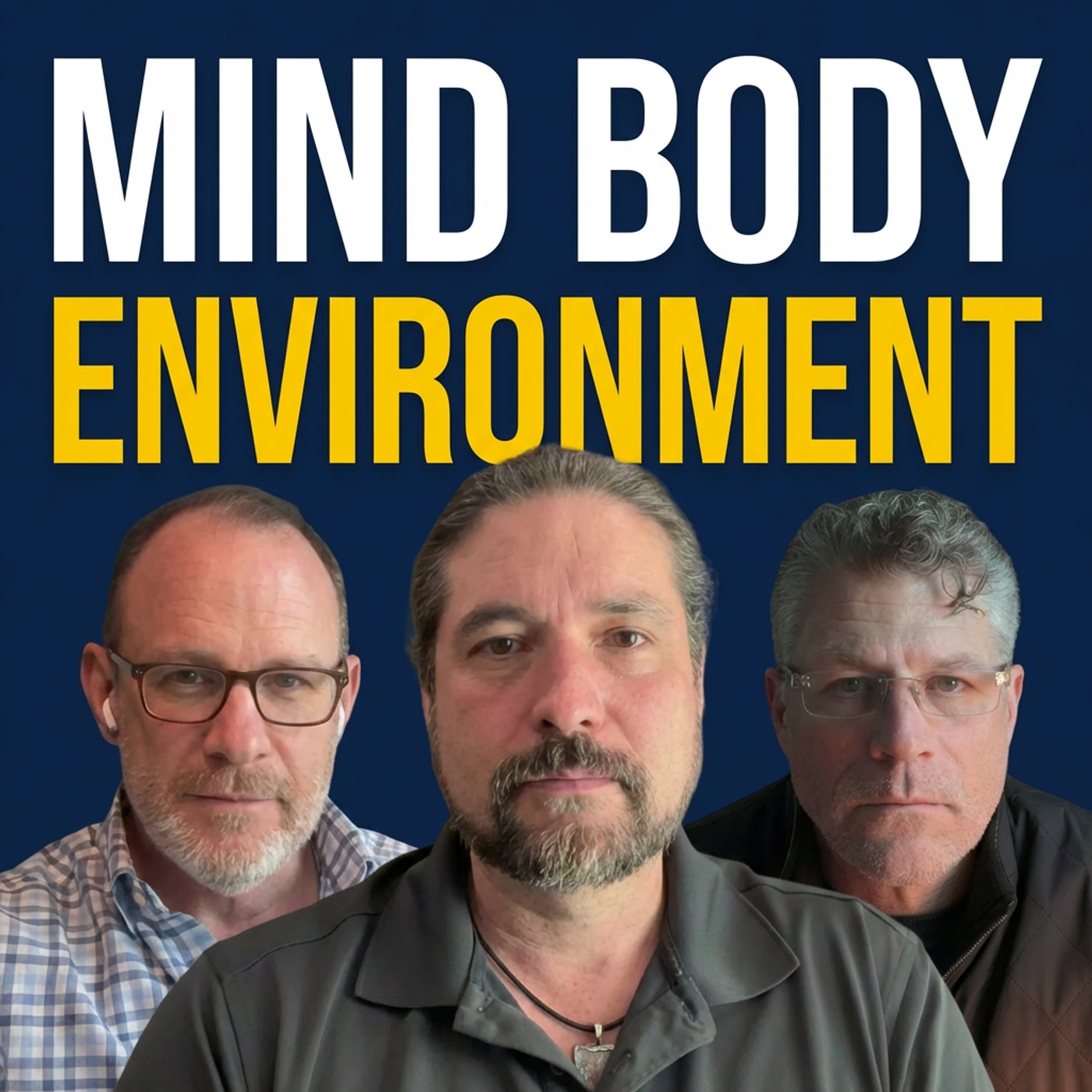
This episode deep dives into the intricate relationship between the mind, body, and environment, featuring insights from Ryan Blazer, a building biologist. The discussion highlights the importance of creating a healthy living space by addressing environmental toxins such as mold, chemicals, and EMFs. Ryan shares his personal journey of overcoming health challenges caused by a toxic home environment and emphasizes the significance of optimizing living spaces for overall well-being.
Takeaways
The conversation explores the role of spirituality and emotional health in maintaining a balanced life.Listeners are introduced to practical tips for improving their home environment, such as increasing airflow, reducing electronic device usage, and choosing natural building materials. The episode underscores the interconnectedness of physical surroundings and mental health, advocating for a holistic approach to wellness. By examining the impact of environmental factors on health, the podcast encourages listeners to take proactive steps in creating a supportive and nurturing environment for themselves and their families.
Scott Schaper: Our guest today is Ryan Blazer, founder and CEO of test my home. â He's a good friend Brian's and they know each other through networking. â Welcome to the podcast,
Ryan: Thanks for having me on guys, appreciate it.
Brian McMaster: Ryan, why don't you tell us a little bit about how you got into what you do, what you do, and what got this stuff started?
Ryan: Yeah. And so, you know, and actually what got all this stuff started, has been more recently â to the surface. I've, you know, I've tapped into something recently or not recently. It's been a while. I've been using this, â the ketamine therapy has been really good to go into the subconscious to kind of see what's going on. It's kind of like a, an onion, you know, you go into and you see what's there and you pull back a layer and you see, I've got a little back. realized when I was four years old, I, and this is just a recent thing that has came to the surface. When I was four years old, I had a kitty cat that my parents got me as a pet and I played with it and I played with it too rough and I ended up killing it. And I remember looking at this cat like, oh my gosh, I just killed this little innocent thing. And what did I do? And I was a little child. I had no concept of death or sin or any of this stuff. And I just felt horrible. You know, at the time I was going to church and so I knew about the 10 commandments. I was like, oh my gosh, I just murdered.
Brian McMaster: Ouch.
Ryan: I'm a monster, what's wrong with me? And I held this in me I had a lot of pain because of that. And it was the first time that I'd experienced pain and guilt and shame on this planet as a being. â as got older, â I that with me. So when I got into high school, I found drugs and alcohol and girls and things that would cover us take that pain away. And so I dove into that kind of stuff, and then music and exercise and then... And then I found, wow, I can create an ego that can build a shell around these things. and I can feed that ego and that ego can help protect my, my inner child, you know? And, and so â learned about, you know, doing good things for people felt good and helping other people. And, and, I learned about the environment around me that we can manipulate the environment around us to help us to either make us feel good or make us feel bad. And I wanted to feel good. And a lot of other people want to feel good too. So let's dive into that. And so. I started throwing these events and parties and, then I moved to Phoenix, Arizona, started building â nightclubs and recording studios. And we started doing, we had a company where we'd go in and do all the sound lights, video, acoustic, the whole environmental control systems. And we were doing high-end churches and restaurants. And it was a really successful business in my twenties. And was all about manipulating the environment around us in order to elicit a response in people. â that response was for people to feel good. Because that's what we all want to do. We all want to feel good on this planet And that's what I wanted to do and it was all driven You know the kitty cat incident had long been buried and in my subconscious. It was long gone. no thought of that anymore But the pain was still there That feeling that underlying anxiety was still there and I was still trying to cover it I'm still trying and of course many other things had been piled up on top of that every every time We sin or we do something wrong, we make a mistake or we have a situation with somebody. we don't deal with that and we bury it, â it stays in â And â the kind of guy, I'm more of a deflector. I'm not a fighter. â I think I was raised that way. Like Jesus, like turn the other cheek. If something bad happens, â let pass. It's okay, like very passive. â And course, then back then I used a lot of marijuana. It kind of goes along with that drug very passive, like, â it's all good, whatever, you know? from all this stuff. And then I eventually got into a house that had a lot of mold in it. And I got really, really sick. In fact, I thought I was even gonna die. I was so sick. And I found out that I had toxic mold problem in the home. And I went to several different doctors and the first couple doctors, you know, I eventually got into a house that had a lot of mold in it. And I got really, really sick. In fact, I thought I was even gonna die. I was so sick. And I found out that I had a toxic mold problem in the home. And I went to several different doctors and the first couple of doctors, you know, I thought maybe it was my gallbladder because I couldn't keep food down, maybe I had stomach cancer, other things wrong. Finally, I to a functional medicine doctor and we did a full panel of testing on my body and realized I was really high in mycotoxins. So I moved out of the house, went on a juice diet. I could only eat like, I had this juice mix that I did cucumbers and apples and spinach and juice it and I drank it. And that's the only really the only thing I could keep down for several months. I finally got my health back. I thought maybe it was my gallbladder because I couldn't keep food down, maybe I had stomach cancer, other things wrong. Finally, I to a functional medicine doctor and we did a full panel of testing on my body and realized I was really high in mycotoxins. So I moved out of the house, went on a juice diet. I could only eat like, I had this juice mix that I did cucumbers and apples and spinach and juice it and I drank it. And that's the only really the only thing I could keep down for several months. I finally got back, my health back. and realized that there's a real negative side to the environment too. I'd always worked with the positive side, the happy stuff. And so I went and got education as a building biologist, learning about the study of environment and how the â around us interferes with our body and works with our body. And we started this company, Test My Home, where we go into people's houses and we analyze the full range of environmental toxins that could be affecting the body. whether it be mold or air or bacteria or chemicals lighting, â water, â know, of these things, â the around the environment, is it cluttered? There's a whole â list we go down that when we go through people's homes to determine are we putting our bodies in this correct environment? But there's also the environment of the body too. â And not a doctor, I'm not a specialist, but I have a lot of doctors. and people around me that I work with. So we focus on what's the environment of the body as well. And then we also have the environment of the mind, right? That's where spirituality comes into play. That's where our emotional intelligence comes into play. What's the environment of our mind look like? And then we know that the mind, the body and the home all affect each other. These are different layers. And then we have the environment of the earth. And even you can go further out the environment of our solar system, know, coming through â these things, you know, so.
Brian McMaster: Yeah, sure.
Ryan: It's the minute, the very small to the very big and all these different environments to interact with each other. And they, there's a scientific play that goes back and forth between all these things. So what happens in the mind goes into the body, go out into the environment and vice versa. So if we have a cluttered mind, we're to have a cluttered body. We're going to have a cluttered house and vice versa. It's going to go back and forth. And so we like to look at all of these different things and how they interact with each other. But my profession, my job is to create the optimal state environment. So.
Brian McMaster: Thanks.
Ryan: How can we create an optimal state environment? What does that look like? How do we test for that? How do we fix it? How do we stress it? How do we recover from that? And how does that interact with the body to interact with the mind? But kind of some of the next things that we're evolving into, I sent you the link the website that I'm working on, is how the body environment works and how the mind environment works and what's the differences between all of those. How do we stress those and how do we optimize those? At the end of the day, we just want to feel well. And just so you know, I have forgiven myself from the kitty incident and that pain has now gone and a lot of other things. So that's kind of my story in a nutshell. Sorry, that was kind of a long version, but that's where I'm at.
Brian McMaster: Yeah, I was wondering if you're...
Scott Schaper: No, that was good.
Brian McMaster: No, that's good. begs a lot of questions. can see Scott's... â got some questions, but that's a lot to unpack. â â
Scott Schaper: No, I like there's definitely like you have to clean out your environment with all the things that you listed, mold, air, chemicals. You have to clean out your inside. â â and I have talked about this before, which is caring for your nervous system, caring for your emotional platform, caring for your response, caring for your behaviors and your mind all into being healthy. â But factors mess with you all the time. â So a great story. Appreciate that.
Brian McMaster: Yeah, and that had, you know, the other thing, the first question that comes to mind, and Ryan, you and I probably talked about this too, but you know, it always amazes me what people get into. I would have never even known that anything existed like a building biologist. know, we, yeah, you know, it's like, what, what, I mean, do you get a degree for that? Or do you, I mean, what, what do you just, is it, is it an online course or is it, how do you get to be a building biologist?
Scott Schaper: Great.
Ryan: Yeah, so now I'm actually on vice president on the board of directors for the building biology Institute. So that's an actual Institute you can go to. It's we do have credited college courses and it's an you go do some online and then you go to an in-person seminar for five days and you take a test and you get certified for that section. So we're going to go learn about mold. We're going to learn about air quality. We're going to learn about EMFs or lighting and you take the education, go through the course that it took for me. It was about a two year process going through. kind of like I guess what so much like an associate's know, wise and money investment wise.
Brian McMaster: Yeah. And there's no killing cats 101 or anything like that, right?
Scott Schaper: Yeah.
Ryan: Not in the, not in there. No, that's, that they just focus on the environment of the, of the house.
Scott Schaper: No, forgiving yourself 101. â
Brian McMaster: Yeah, that's fantastic. Go ahead, Scott.
Scott Schaper: I remember, â I remember a friend of mine, this was a lifetime ago. So were, we became drinking buddies â we probably drank a little bit too much, but were both kind of in a way broken people. I was in between marriages. I was not doing well. She was in between relationships and we just became close friends probably at the right time. And so time I went over to her house, to her apartment and it was an absolute like a hoarders mess almost. clutter. Couldn't see the â carpet in many areas. And I'm a bit of a neat freak and I offer, I'm like, hey, let me clean this up. You go to work one day. I can work from home. And so I went over there and I cleaned her apartment. And then I had to do that about every six months. But I learned, I'm like, oh, this is just me helping a friend. But I learned that how you feel on the inside is how you carry your environment. Because slowly she stopped doing that as she started healing herself, know, time heals. And as she got farther and farther away from that bad relationship or that break, that bad breakup, she... that kind of gave her some inner turmoil, which left her environment in a bit of a turmoil state. And then it slowly got clean as she kind of healed from that. And that was the first time I remember that. I don't tell that story too often, but you just said that you clutter your life when you're cluttered inside â part of healing internally and externally. mean, Brian and I talk about this play between healing the mind â curating what goes in your eyes, what goes in your mind, what goes in your mouth is all â interplayed together. So it's interesting you said that. That's what resonated with me.
Ryan: Yeah. And you you talk about people can spiral downwards. We can also spiral upwards, but spiraling downward happens because the body and the mind, it affects the environment and the environment affects, they go back and forth. It's a two ways tree. So if my mind is cluttered, I'm broken and we're all broken by the way, every single person on this planet is broken we're here to fix and heal and repair and get back to, you know, And I'm not sure what your religious aspects are, but I believe in God. believe in Jesus. And I believe that, you know, he came down here and let an example of this is how you're supposed to live on this planet from a spiritual and a mind viewpoint. And a lot of that is the forgiveness and the love your neighbor and the 10 commandments. these things are meant to declutter the brain so that then we can declutter the body and declutter the home. But if we have those things in reverse, if we have a cluttered home, we have a messed up body. it's gonna go backwards up into the brain too. And so we're gonna spiral downwards. But once we start fixing these things and taking these layers off, then we can reverse that and start spiraling upwards. So that's, when you read in the script, it's like talk about we're in the grass, the chains of darkness and, and, and hell, you know, that's true when you're spiraling downward, it's hard to reverse that and get out of that, but you got to consciously stop. pray about these things, start taking the negative things out, the negative thoughts out of the brain, the negative things out of the body, the negative things out of the home, and start adding in good things. And then we start spiraling upwards, and then it's then it's beauty from there.
Scott Schaper: Yeah.
Brian McMaster: You know, it's kind of interesting, reminds me of, you know, when I'm having a bad day at work, clean up your desk. I'm sure you've all done it. You know, it's like, oh, I'll clean up my desk and you feel so much better. Like immediately it puts you in a different frame of mind. mean, the same thing goes for your environment at home. touch on, Ryan, some of the things that you helped us out with. is it me, it was, you know, dealing with Ben, I did these, these tests, and all of sudden I have this high mold content in my blood. And like, your environment, â you this somewhere, it's either in your office, â or in your gym, or it's in your house, or someplace you're staying. And he's you gotta, you gotta find out where this is, which is how you know, we got engaged. â Is that how people â come to Do they? Do they do a blood test or do they just not feel good or is it when they're when it's kind of in the nth hour and You know, I got cancer. I don't know why and you know that type of stuff. How did how do people typically get to you?
Ryan: I have three different types of people that come to me. The first type is the, I call them the warriors and the warriors and the sufferers. Those are my three people that come. The warriors, that's typically going to be your mom, couple kids, sometimes brand new mom. And they're just being mom and bear, worried about their kids, worried about their family. Like is my environment safe? Come and check out my home, make sure that what I'm providing for my family is a nice, clean, safe environment. Then you got your... Warriors and that's kind of like us, you know the biohacker type like we're gonna live to be 150 and we're gonna be snow skiing and hiking all the way there and you know and Those type of people are fun. We're going to their home. They just want to optimize like I'm a CEO I need every second of my day counts it matters and I want to make sure that I'm optimized in all areas and then we have the suffers and those are the people that are that didn't pay attention to this stuff and or didn't know about it and they got really sick and now they're looking for answers and they just want their life back. And this can be some of the most rewarding work to do because you can change lives in this area. And we see these people that have gone to different doctors, they've spent their life savings and they're not seeing results and they're still sick. And then we go into their home and find, well, because you have black mold or you have this or that. But know, that's, you know, again, that's the way it goes into some of these other areas too, in the body and in the mind, because we don't usually look at. It's stuff in the mind. We don't look at some of the stuff spirituality, too I've seen people that have a perfect environment a perfect diet a perfect workout But maybe they're in an affair and they're living with a lot of guilt and shame And so their health isn't that good because they have some other things going on So when it comes to overall health and wellness, you got to look at all three of those things But as far as where we come in as the environment, we want to make sure that that's pure and clean
Brian McMaster: Yeah, and everybody has a friend, right? The friend that worked out all their life, didn't eat cheeseburgers, ate kale and vegetables and juices and all that kind of stuff, and I got cancer. I just heard a story this weekend, someone runs marathons, does all this stuff and they get cancer and they pass away. And I think it's to your point, the environment is terrible these days, the air is terrible, the EMFs, all that kind of stuff, which I'm sure we'll get into here. But to your point, you've got to look at every aspect of it. And you can't just be taking care of one, it's got to be a conglomeration of them. So.
Scott Schaper: How much is, you know, the body has cleaning, filtering, â you the liver, kidneys. There's a lot of things when you eat something that's not awesome for you, then there's a balancing mechanism in the body. Is the that we live in now just too toxic â or that can't keep up or are you just providing your body the best possible environment? thrive. How much is we can we're allowed we're allowing our body to do its thing like non-organic food versus organic that sort of thing.
Ryan: Yeah, our pod. Yeah, there's a big spectrum as far as the environment we live in. I've seen really nasty, dirty environments where you can go into, can I use your home, example, Brian and in the. â
Brian McMaster: Yeah, sure, absolutely. He only spent 15 minutes with me, Scott. He walked in, he was like, man, can't, I can't.
Scott Schaper: Cheers.
Ryan: â That was pretty bad that your farmhouse there, you know, so it was built it had a lot of moisture coming in I walked down as soon as we open the door you could smell it I put the mask on I could even smell it through my mask, which is rare I only spent an hour in there and I had a headache I didn't feel good the rest rest of the day and you didn't either when you and that's why you call me out, you know, but that's so there's really bad environments, but the answer your question our bodies can
Scott Schaper: Really? Okay.
Brian McMaster: Yeah.
Ryan: detox and get rid of a certain amount, a certain level. And that just depends on how well you've trained your body, how healthy you are, how well your detox pathways are working. just like there's a spectrum with the environment, there's a spectrum in the body too. Like my 80 year old mom doesn't detox as well as my 15 year old daughter. It was exercising and out and healthy and running around. We just have, and we have different gene you chase. The MTFHR gene.
Scott Schaper: Yeah.
Ryan: And there's an HLA DR gene that the detoxes mold better So it has to do with the body and the environment so we can have a perfect storm where we have someone that doesn't detox very well and they're in a horrible environment and they're gonna get really really sick
Scott Schaper: Is all mold bad or just black mold is again probably a spectrum of what's bad, what's okay.
Brian McMaster: And
Ryan: Yep, it's a spectrum just like animals, you you got little kitty cats and you got grizzly bears. It's a whole spectrum.
Scott Schaper: Right. So is there a mold in every building? It's just that there's a safe level that we can tolerate.
Brian McMaster: N N That's a question too.
Ryan: Yep. Mold is an organ just like us and he's food and water. And so anywhere where there's food, which can be organic material, leaves, dead skin cells, paper, wood, our home is perfect food. And then we add water to it. So that can be an actual leak or flooding, or it can be high humidity. And then we have a mold spore that lands and it's going to sit there and it's going to grow mold. So there's, there's no such thing as a mold free home. There's always going to be some mold in the environment unless it's like a â clean room, operating room or, or something, but There's different types. So if we're bad, like stachybotrys, the black mold you hear about, if that lands and starts growing, â only takes a small size, maybe about the size of this, grown over in the corner â make me sick, versus something like blue cheese or penicillin, which can actually be helpful mold. It grows on the cheese, you eat it, â not a problem.
Scott Schaper: Yeah.
Brian McMaster: Not my farmhouse as an example, Ryan. â us â worst situation you've ever been in. â â it was, because that house is â 100 years old. And we've got to do some things to â mitigate and we're going to talk about that. But â what's the worst situation you've been in?
Ryan: you Yeah.
Brian McMaster: you know you've gone in and like holy cow this is this is not good
Ryan: â if we're talking just environmental wise, I remember I went to a house where I went and did an inspection and, and then we got through the whole day and they were like, wow, this is crazy. I didn't know a lot of the stuff. He's like, I have a friend of mine. He just lives up the road and you go just stop by and check out his house if you have time. he just want to look cause he moved into this place and within six months his health has gone way downhill. It's really bad. And so I went over to the house, hold up. And first thing right after that is he was right underneath one those high voltage power lines. Like I could have stood on the roof and touched the power pole with a broomstick. Like that's how you can hear a crackling and pop, you know, hairs standing up on my arm. Okay, well, first of all, that's a bad sign. I opened our walk in and it just smelled musty and dark and damp in there. And I look in and there's mold growing on the wall and he had pets in there that were.
Brian McMaster: Yeah. â
Ryan: doing their thing on the, and the guy's handicapped, so he couldn't really get around and clean too much, so there was a lot of clutter. So I'm like, man, you know, just right off the bat, I see mold, you have high EMF from electronic, from high voltage power lines. You don't have a lot of air flow in here. You have bacteria from the pets. You know, within like 30 seconds, I already knew this was a very toxic environment, but that right there, I'm like, yeah, you need to move out of this house.
Scott Schaper: Wow. Quick story, when I was a kid, we lived in Romeoville, Illinois, right outside Chicago, and we lived underneath those power lines, those giant, the giant, not just home power lines, those ones that run through the city. if you carried a fluorescent tube out into the backyard, it turned on.
Brian McMaster: Yeah, that's...
Scott Schaper: And the garage light never went out in our house, no matter what you did. It would be brighter on and never off. But you could walk around in the backyard with a lit fluorescent bulb. was that doing to, Ryan, â laugh about that all the time, but what was that doing to us?
Brian McMaster: No.
Ryan: Well, we're electrical chemical beings, right? Our nervous system, our heart, our brain, everything works on these electrical impulses. so our body supplies that for us. So ancestrally, we didn't have all this electrified systems on the earth. And so we just had our body and we had what came from the sun and everything was more simple. But when we overlay these frequencies, especially the power grid, they go through the body and they interfere with our systems.
Scott Schaper: Right.
Ryan: It's just kind of like static in the background, but it can induce currents in the body. The magnetic fields can interact with the heavy metals and the iron in our blood and cause inflammation. You know, there's a whole range of things. Studies are coming out left and right now about different things that it does to the body specifically, but it's just an interference. It's a stress on the body.
Scott Schaper: Right. I guess it'd be no different than holding your phone against your face. There's a different, there's a different vector of interference.
Brian McMaster: I was new.
Ryan: Yes, different frequency, higher frequency, yep.
Scott Schaper: Yeah. So when you go into people's homes, you're dealing with all sorts of environments. What are the most common misconceptions? People say, â thought that that was, mean, what do you hear from the public that our can be like, yeah, we have that?
Brian McMaster: Yeah, I win.
Ryan: One of the biggest things like if I can buy it at the grocery store, must be healthy for me. That's one of the biggest things, you know, like you go down the go to Walmart, you know, target, you go down to the cleaning aisle section and look, a lot of that stuff is real talks. Pull it back and look at the warning labels. Don't, don't drink, don't eat, don't put it on your skin. It's toxic if you ingest it, call the poison cup, like all of these things. But yet we buy all this stuff and bring it home and we put it on our skin and we put it on our house. We put it all over and then Pretty soon our home becomes this toxic soup of chemicals that we've brought into our house. think that's one of the biggest misconceptions that just because it's available for us to buy that it's safe and that's not. We have to be very, very careful about things that we bring into our homes chemical wise. That's probably the biggest.
Scott Schaper: Yeah. A lot of cleaners say right on there, not use in a well ventilated area and our homes are not usually well ventilated areas.
Brian McMaster: Reminds me. Reminds me of the Mr. Yuck stickers. Remember the Mr. Yuck stickers when we were growing up? Those Mr. Yuck stickers should go on everything pretty much that's in household these days. Ryan, question for you. So people...
Ryan: Right. Okay.
Brian McMaster: they do tests or whatever, you know, and and they can really just like anything else They can take a deep dive into this stuff, right? And they can have you come out and inspect the home and that type of stuff But â would you â someone who's listening to this right now and saying â â scared or you know, whatever if what are what are maybe one or two or three things that somebody can do to? Kind of mitigate things, â know â What can they get away from what can they add to their home? You know, whether it's an air filter or something along those lines. mean, you're listening right now and you're not ready to take in a, you know, just deep dive into it, what are some simple things that people can do to kind of clean up their environment?
Ryan: Yeah. And first thing I want to talk about with the fear is fear can be a healthy thing. can also be a bad thing is how we transmute that energy. Fear can either turn to action and drive, or it can turn to anger, depending on how we deal with that fear. And it's good to have a little bit of fear in this because that's what drives us to do things. And we should be a little bit fearful our health and for our family's things. But I'm definitely not the one, the fear monger and put that out there. However, it is a big driver for people to take action. And so we do want a little bit of healthy fear around some of this stuff because this stuff is real, it is dangerous, but fear needs to come with a solution. And so like you just asked, what's the solution to some of this stuff? So I would say, you know, one of the first things is, is if you can open doors and windows and get some fresh air. Like right now I'm here in Boise and it's beautiful today. It's like 50, it's probably gonna be 60, 70 degrees today. It's been an amazing fall this last week. clear blue skies, we don't have any fires, there's no smoke, there's no air pollution. So we're gonna be cracking the windows, we're gonna let the air flow flush out the house, fresh air in, toxic going out. But another thing I like to do for people just starting is go through your home and you can download an app. There's an app called EWG, Environmental Working Group, or Think Dirty, which is more about cosmetics. And you can scan the barcode. â if this was a cleaning supplier, I'd scan the barcode with my app. and it would rate it on a scale from one to 10, how healthy is this product for me? And then all of the things in my home that are toxic, but maybe on a scale from like, we say, okay, anything that's four and higher, we're going to get rid of. you know, when I first did this, what 10 years ago or so, we ended up with like two garbage bags in my house full of just crap. Like, â my gosh, I didn't realize that so many things hiding underneath the cabinet over here and underneath the sink and then in the laundry room and, the garage and so. get all of the toxic stuff and just get it out and then replace it with natural things. So the 409 cleaner you had that was toxic or spraying everywhere, replace that with vinegar and water, lemon essential oil. It's actually even cheaper, it works better and it's a lot less toxic. But also the third thing I would say is turn off your electronics and your devices when you're not using them. So at night when you're going to bed, put phones on airplane mode, turn them off. When you're done working for the day, turn your laptops and your computers off. when you're not using the gaming systems or the TVs, turn those off, unplug them, they'll still transmit out because a lot of times in these homes that are smart homes, the more modern homes, we have a ton of technology throughout them and they're always on, they're always broadcasting. And there's even more conversations about data collection and privacy and things like that these days is a really big deal that a lot of people don't think about, but also the EMF exposure to that. So just turn these devices off, unplug them. you're not using them. So I would say that would be my three biggest tips that you can do that are free and easy. You can implement right now.
Brian McMaster: Yeah Scott, I want it too.
Scott Schaper: We have it.
Brian McMaster: I just wanted to tell you real quick. So has this meter and we don't â to go into the details, but he's like the nuclear box, you know, where he's got all this stuff in there and â you know, these toys and gadgets, but dirty electricity. â Right next to head, â I have a â of electricity â and puts this next to it and it just goes berserk, goes nuts. And it's like you're laying next
Scott Schaper: Yeah. you
Brian McMaster: to this when you're sleeping at nighttime. and there's better, â I it highlighted it right away. It's like, â my God, I'm gonna flip around â for But you know, we worked through turning that circuit off and that kind of stuff. But â it blows my mind. You know, what's really being â injected into â
Scott Schaper: Yeah. Yeah, I don't keep my phone in my room. I keep it in the kitchen when I charge it at night. does Suzanne. But I have an alarm clock sitting there and it auto changes for savings. So it must have some sort of connection to the world that's wireless. it just as bad to have my alarm clock right there?
Ryan: So if you have, best would be a battery powered alarm clock that just runs off of DC voltage would be the best thing to go. And like Brian was talking about, when we do this at our house, we turn the circuits off at night. in kid's room, it's on timer and we had an electrician wired up to the circuit. So at nine o'clock it's lights out, six in the morning lights turned back on. That's kind of their alarm system. And then anything plugged in or anything that's using energy in that house or in that room gets shut off and they could get zero exposure.
Scott Schaper: Hmm. I saw devices you plug into one outlet, it cleans the electricity for the whole house. Is that bogus? Is that â it or what?
Ryan: They're little bandages, what those are little filters, they're little line filters. know when, okay so when you buy like an AV system and you have your home theater system and they sell you the power conditioner box because there's spikes and there's dirty electricity, there's light interference, you know and that's you know a thousand dollar conditioner that condition that space for you.
Scott Schaper: Yeah.
Ryan: They work and that's good, but for a little device to plug into the wall to do the whole house is unreasonable. It's not unrealistic. So when we used to do the recording studios, we'd spend, we'd have a hundred thousand dollar budget in some of these just to provide clean power. Filters and K-type transformers and oversized neutrals. So there's a whole system to provide clean, pure power so that we don't get any of this background interference. So yeah, $20 plug into the wall is not gonna, it's gonna.
Scott Schaper: This way, sir. Got it.
Ryan: maybe take a couple percentage points off, you know, but it's not.
Scott Schaper: â So having the circuits off at night, then you have no exposure when you're sleeping. What is your personal experience with your sleep with that, with doing that?
Ryan: Well, you know, again, it kind of comes back to this I created is that our overall experience of life has so many factors to it. You know, did I eat a big meal before? Am I stressed out? What supplements have I took? Did I drink coffee too late in the day or did I drink caffeine too late in the day? All of these things â make a But when I reduce EMF, that makes a positive difference. So â I look it it's like a needle and some things go, this is healthy. This is not healthy. Everything tips that needle one way or another. All these decisions that we make tip that needle one way or another. So turning off the cell phone, turning off the circuits, making sure there's no light in the room, making sure the temperature is correct, making sure there's clean air. That's all tipping it to the healthy side.
Scott Schaper: Check in as many boxes as possible, not just one thing, cure all.
Brian McMaster: Amen.
Ryan: Exactly. Yeah. There's never just a one box. It's always a combination of all the things.
Brian McMaster: Also, that's a good point. to say, because I know you both all been or you've been through this, I've been through this as well, is â for our listeners, you can get really overwhelmed. There's lots of gadgets. There's lots of toys. There's lots of there's lots of things. There's â shielding paint. There's you know, there's all these things that you can do to mitigate your exposure to these things. But, â know, I think I think it's important to keep it simple, right? Just like you said, turning your gadgets off at nighttime, you avoiding screen time at nighttime before you go to that turn your internet off at nighttime, know, just those simple things, because I think it's just like any biohacking or any routine or any exercise, you can get really overwhelmed by it's like, man, what am I doing? You so I think keeping it simple to start with and then kind of gauge in how you feel, you know, as soon as you stop, stop looking at that screen at nighttime, to me, made a tremendous difference in my sleep â turning my phone off and moving things into the other room like Scott had suggested as well. â I think it's just important to mention that don't overwhelm yourself. Just do small changes, small shifts, those things will â benefit you. â
Ryan: Yeah, cause sleeping is a big indicator of how your day went a lot of times, you know, are you stressed? Are you ruminating about things like what's going on in your life? There's a gal, Molly Eastman, I did her place and she has a whole business around this and she'd be fun on your podcast. her sleep is a skill and she does speaking events about it. It's a whole thing. Like it's a whole science. So yeah, you talk about getting overwhelmed. I mean, there's a lot to a lot of this stuff, but there's simple things we can do. You know, we want to break it down to like, what's the one sheet.
Scott Schaper: Yeah, for sure.
Ryan: check off we can do.
Scott Schaper: this is a mind shift for a lot of people because these are invisible things. So I can't see it. It's probably not a problem. I is something that's invisible, although it becomes visible when it becomes a problem like a health problem. But â radon, and benzene are all invisible gases that are in people's house. And I find even in my own family, not in my household, but my own family, I asked my brother just over the weekend, he has new construction. I'm like, you have a radon mitigation system? I don't know. I think we have the piping for it, but we don't have the fan and we never got tested. To me, I'm just like, what circumstances are you not, your family's there. And so. â He has a gas stove, 99 % of gas stoves leak both methane and benzene into the house. People are sold on gas stoves and he wouldn't have it any other way. He laughs at me because I have an electric stove, right? Or an induction stove. But it's like I have sealed combustion fire over there. And it's like I have my home tested for methane, benzene and radon, and then I take measures to make sure they're not there. But is this considered woo science? people, do consider you hokey science?
Brian McMaster: You
Ryan: â This is a deep question, that's a really good question. We live in a world of faith and a lot of things unseen. know, again, back to spirituality, that's the main reason why we're here on this planet is to be tested and to have faith and to believe in something that we can't tangibly see and feel. That's one of the most underlying things of our existence.
Brian McMaster: Yeah.
Ryan: And that does carry over into our day-to-day lives of things that are unseen that we don't know about. And really it just has to do with education because God isn't some magician magic. He's working with science and rules. And I'm sure one day when we, you know, go and get to meet him if we do, and then learn about what he's doing, we can see, â yeah, that makes sense how you're doing that. It's all science. And as we learn, like if we were to go back a hundred years with the technology we have, they would look at us like some crazy magicians with our phones and. how we're having this interaction right now over the laptops. And so when you ask is this stuff woo woo science, it's just simply because we don't understand how things work yet. We call it woo woo. That's because all of these systems are at play, all of these systems are working. And so when I go into a home and how I've based my business is that everything that I test for must be scientifically measurable, it must be replicatable, and it must have some. data to back up why we're testing it. there must be some peer reviewed studies that say, yes, radon has been studied and it has been shown to cause cancer and lung cancer 20,000 Americans on average per year. So we will test for that with this certified meter and we've measured under certified conditions. And so there's a scientific method to that. So everything that we do is measured and has to back it up. Now, When you talk about the woo woo stuff, that just means that we don't really have scientific data on that yet, and we don't have a way to measure that yet, and so we're using faith. And so to me, faith is extremely important in this world, but we gotta have faith in the right things. And that's where things get very, very confusing is who are we having faith in, who are we listening to? And that, like I said, that's a deeper question. That's a really deep question right there. Hopefully that answers, I know, I kinda went all over the place with that.
Scott Schaper: Hmm. That's okay. I love it. word, Brian, do mind if I keep going? â The â myco toxin â some people heard micro or some people heard Mito. I think those are real toxins, but NYC o toxins. Does that always refer to mold? What is that word for our listeners to find that for us?
Brian McMaster: No, go, go man. I love it.
Ryan: Yeah, so we have mold, that's the growth that's actually growing as it's eating our house releasing gases and releasing poisons and releasing toxins. â basically mold farts for lack of better terms. â they call it mycotoxins. So bacteria has that and they call it endotoxins.
Scott Schaper: Okay, got it.
Brian McMaster: Nice.
Scott Schaper: Interesting. Okay. Interesting. Love that. Thank you. Real quick, we'll take a quick break and we'll talk about some of the things that we're either, what are we reading? What are we eating? What are we needing? Right now in our life, something that's â a little bit different, could be just something that you might recommend our listeners. We might sometimes we'll put a â ad read here. But I'll just go around the room. I'll start with Brian. He usually has something on his desk that he's eating or shining into his face every day to help his health. What do you got? What do you got, Brian? What do you got to recommend?
Brian McMaster: Actually, I do I have my light here my sun lamp Actually, I Ryan knows these guys new topia dopa drops â so I â right don't know if you've used these or not, but â Dopa means support, so if I'm kind of feeling down or blue because of the weather or something along those lines, I'll pop one of these bad boys and they are phenomenal. Newtopia is a great great company, good science-backed, so I â highly recommend â the Dopa drops and they're so popular they usually don't have them in stock, so â try to stock up whenever I can. So â â thing on my desk for today. â
Scott Schaper: How do you take it? It's under your tongue or what?
Brian McMaster: No, it's a capsule. So I'll pop it with a glass of water. Yeah, yeah, just like taking a vitamin.
Scott Schaper: â OK. Well, you never know. I always have to ask because some stuff you put in your eyeball, sometimes you sniff it. I why I like to get specific when Brian recommends something.
Brian McMaster: Yeah. I all that stuff here too. get Sniffer's and all kinds of stuff. My desk is definitely popular.
Scott Schaper: do you got? What are you reading? What are you eating? What are you trying that's new right now?
Ryan: Man, about everything you could imagine them. I'm testing everything all day long. if you were to, I'm a lot like Brian, if you were to look in my medicine cabinet over here, looks like the with yeah. Oh, like what he just said, I have that in my cabinet. You know, one, one thing I've been a client showed me is called momentum. It's a energy. It's a no, it's a protein drink.
Brian McMaster: Ha ha ha!
Scott Schaper: Yeah. Yeah, we're experimenters. Yeah, for sure.
Brian McMaster: you
Ryan: But it has colostrum, has NED, it has taurine, it has all the things in it that you normally mix into it. So know, if you go to like Sun Life Organics in Austin or Malibu and you get the $40 shake that they have there, it has all this stuff in it, all those add-ins â it. So it's kind of like the one-stop shop. So I've been doing that, I like that. Reading, I mean, I've been â studying John, the Book of John right now, there's a lot of really interesting stuff there. Just trying to... really understand Jesus a little more because feel like he really did give an example of how to live â on this planet. that's, know, religion aside, he gave some great advice. I don't care what religion you're in. It doesn't matter what your faith is or what you believe. That man â gave some really good information on how to live on this planet. â And I'm just trying to understand that as best as I can to make sure I'm not missing anything. And â that found a lot of good nuggets in there.
Scott Schaper: Awesome. Thank you. I'll just say I started a new book last week and Suzanne and I are listening together while we walk in the mornings, but it's called The Small and the Mighty by Sharon McMahon. That's 12 different stories about 12 different Americans who were never made it into the history books, but had so much action in their lives from the 1400s to the 1800s, all the way up to modern times.
Brian McMaster: great.
Scott Schaper: how they shaped the course of America and never really, not the credit, but the stories just didn't make it into our history books and it's amazing. how the education system was because of these random people who took these actions as slaves or right after â slavery during the revolution that just shaped so much of our lives right now. it's really cool to hear these small stories of doing extraordinary things. I'm like, it reminds me of, â that's what we do day. We just kind of walk your course, mentor other people, be an experiment. stuff and I think I think the three of us are doing that and talking about it and keeping the voice voice â raised education is really important stuff so â anyway stuff yeah the small and the mighty great book
Ryan: Yeah. No, that's good. Yeah.
Brian McMaster: They didn't write a big enough check.
Ryan: That sounds good. You know that you're smart if you can learn from other people like that, other people's mistakes. I'm the kind of guy like if you tell me it's hot, I need to touch it once, twice, maybe three times and get burned a couple of times. I'm like, okay, that's hot, I believe you. But smart people, smarter than me can look at other people and learn from their mistakes. So it sounds like a great book. I'm gonna check it out.
Scott Schaper: You
Brian McMaster: I love it. Love it.
Scott Schaper: I have a question. So if you go and you're going into a lot of existing structures, lots of different buildings, maybe some commercial too. We didn't talk about commercial, but mostly residential. What about what should people do if they're getting ready to plan a new build? What would you say? Do not put those in your homes. Make sure you wire it this way. â three or four tips for building a new structure.
Ryan: Well, the first thing is to make sure you pick a really good environment in the first place, because the home that's like our, our second skin, that building envelope. And so whatever is in the environment outside of that, where they're protecting from, or we're allowing that in because our bodies thrive in nature. So we want to bring as much nature as we can into the, into the home. The problem is now with a lot of these modern homes is we build this shell around us from us and nature and everything in it is synthetic. the paint, the chemical, unnatural lighting, the flooring, the off gassing, now plastics, all the things. And so now we just blocked out nature. So you want to think, how can we integrate nature? How can we, but we still want to be able to control the temperature. We want to be able to control the environment, but how do we integrate it? And so when you start, it's not necessarily about a checklist of what to do. It's a, do we think about the homes around us? Because they are living extensions of us.
Scott Schaper: plastics.
Ryan: But when we start looking at them like that, and it's also our inner, it's our connection with the nature, with the environment outside of the home. So how does that interact? How do we get the fresh air in? How do we get the natural lighting in? How do we get the visual aspects of nature and animals the environment outside of us? So all of these things are important to think about. I want you to start thinking about it like that. Then it, then it kind of opens up the pathways â us. And then also how do we live in the home?
Scott Schaper: Mm-hmm.
Ryan: What are my habits? I go into a lot of people's homes, I these big, beautiful homes, but they're not using their homes, they're a lot of wasted space. They have this one room that's all set up, decorated nice, but they never even use it. Maybe they sit in it once a month when some special comes over or something. But single part of your room or of your house has to have a specific purpose. And what is that purpose for? And then go through that on your plans and designate. Kitchen, that's for eating and fueling my body. the office, that's where I'm gonna make money and that's where I'm gonna be creative. The bedroom, that's for resting and intimacy. The bathroom is where I'm gonna get ready for the day and clean my body. The gym is where I'm gonna stress my body and grow and adapt. The library is where I'm gonna learn. The living room is where I'm gonna entertain. And once you have all of these things kind of in your mind, dialed in on your plans, then you can go in a little bit closer and design that room accordingly for that purpose. and only keep it for that purpose and don't intermingle those things.
Scott Schaper: Mm-hmm. Wow. Love that.
Brian McMaster: I think worth saying too, â our listeners, â â a coach for... â for business, you find a coach for your health and wellness, that kind of stuff. You know, when Amber and I go to build our house in a couple of years, we're gonna, mean, Ryan's gonna be one of the first calls, right? You hey, Ryan, we're gonna do this, we're gonna design this. Tell me what materials that we should use. Tell me how we should set this up. Tell me how to test the environment. And I know Ryan knows us too, Ben Greenfield, who we know really well, he just built a house in Idaho and he did all that stuff. You know, he's got geothermal. got the materials that are low EMF, low mold. He's a water system and that type of stuff. So â when going to do something like that, find somebody who knows what they're talking about. â That's a â good of action, â just â
Scott Schaper: Yeah, the other thing is our carpets are primarily nylon, the plastic or petroleum based. We're laying vinyl flooring down the paints that we put, like you said, the coatings on the walls. these simply â sloughing off microplastics into our air? Are losing the war on plastics right now? â We choose different materials. I mean, even if I put hardwood down, I'm gonna coat it with some sort of polyurethane, which petroleum based.
Ryan: No, you're absolutely right. And I always tell people if we can, don't bring it in your house, don't put it in your house if you wouldn't put it on or in your body. I'm pretty serious about that. And that excludes a lot of modern day track homes, unfortunately. So what does that mean? Like there's a lot of these homes, we were using clay and lime plaster on the walls. We're using natural wood on the floors and for the cabinetry. We're using stone, we're using tile, we're using linens. We're using natural wool for the insulation. There's a way to build a...
Scott Schaper: Great. Yeah, right. Printed concrete is kind of a cool, clean material.
Ryan: Concrete, yep, we can use concrete. Yeah, so there's a lot of natural building materials that we can use. And you look back in Europe and some of these really old castles and things, they used stone, they used wood, they used these natural building materials. They're still there, they're still healthy. It's these synthetic fake materials that we're now using and bringing to our homes that are causing problems because they're getting into our body. It's convenience, it's fast, it's cheap.
Brian McMaster: and it's convenience.
Ryan: And that's the American way, but that's unfortunately comes with the health risk, comes with the cost.
Scott Schaper: Ryan, what was the name of the board that you were on when you talked about building biologists? What is that called? so like there's a LEED certified building that says you did this much green stuff. It talks about carbon footprint. Is there a certification that says you're certified clean environment? Is that something that you guys can develop?
Ryan: You have the Building Biology Institute. There is, so LEED certification is more about let's take care of the environment outside of us. Let's save trees, let's save water, which all that is great. But the problem is it doesn't, doesn't at the cost of our bodies. Because it makes it airtight, it makes it energy efficient. And there's a balance, right? We wanna have a balance. There's the WELL certification, which I think does a little better job, where they include mold and that's more focused on the body. Then the Building Biology Institute,
Scott Schaper: Yeah, but an internal one. Yeah.
Ryan: Chaman, we have healthy home standard that we have. It's definitely not as popular as well or lead. And then I'm coming up with one, human optimization guide. So there's lots of different studies, different things out there. only maybe 50 people know about. The Billion Biology one maybe 10,000. Well is in the millions. it just kind of who, what standard are you following? Which one are you going by?
Scott Schaper: Love that.
Brian McMaster: Hmm.
Scott Schaper: Yeah, I always hear build your home tight, but always ventilate well. So an air exchanger that exchanges the air with the outside air reconditions it on the exchange in. But exchanging that air â the only way to combat a tight building envelope. Both are good, but they have problems. Yeah.
Ryan: You gotta have airflow. You can't have still air.
Brian McMaster: was one of the things we found in our place. needed better airflow, which is something we're going to continue talking about. all this mold talk and all that stuff has been fantastic, but you're working on something else right now too that you shared and I'd be interested for our listeners and Scott to hear kind of what you got going on because it kind of led from the stuff you're doing with environment and those kinds of things when you go into people's homes, I think you start to realize There some other things that you could address as well. I'd love to hear more about that.
Ryan: Well, yeah, because, you know, people come to me, they want to feel well, they want to feel good. When people go to doctors, they want to feel well. When people go to their trainer, their fitness coach, their health nutritionist, they all want to feel well. And so everybody has their own lane of genius. know, mine is in the environment and like Ben Greenfield, friend, he is his is in fitness and, know, but there's felt like there wasn't really â stop shop where we could go to get all the information where we could look at everything because I go into people's homes and they may have the perfect environment, but then the kids are running around crazy and I look in their pantry and they have Skittles and Cheetos and all kinds of artificial crap and I'm like, well, it's not your environment, it's what you're eating. I could tell there's tension between the husband and wife and the relationship wasn't good and there was a lot of stress there and that stress was putting out into the kids in the home and you could feel it. â so I realized maybe they're not connected with God or maybe they're holding onto shame or. you know, maybe there's an infection in the body or whatever it is, there's, there's so many things to fill well. So over my years in my journey, and I really based it off of myself and you know, I'm really blessed to be able to work around and work with a lot of really smart people and lot of professionals. I put together this human optimization protocol, which is what's the optimal state for the three different environments, the environment of our house, the environment of our body and the environment of our mind. And so what does that look like? What is So optimal state for that, like in the home, it would be no 65 to 75 degrees. It would be less than 600 parts per million on carbon dioxide. It would be no mold, would be no bacterial overgrowth. It would be no gas leaks. You know, I have a big list. And then in the body, what does that look like? Hey, we're fully rested. Our joints and muscles are working great. We don't have any infections in the body. We don't have any heavy metals. then... I have a big list for that. And in the mind, what does that look like? We're not holding on to any shame or any guilt or we're feeling gratitude or we have a connection to God. You get on big list, but then we can't live in optimal state all the time. That's not realistic. And so also we can't adapt in an optimal state. We will become weak and we'll get used to that. So we need to stress that. And then we need to recover from that. So for example, like temperature is an easy one. We wanna do cold plunge once in a while to stress the body out of its state. And then we wanna recover from that. We can recover from doing some exercise or maybe we get in the sauna to recover from that. Or mental state, maybe we need to have a hard conversation with somebody where we're getting into that negative energy zone and we gotta have a hard conversation. And that stresses the mind a little bit. And then after that, maybe we listen to some good music or we go for a walk or we recover from that. Or with like the body, we wanna go into the gym and we wanna stress the muscle, we wanna work out harder. And then we want to recover from that. that every time we recover and when we stress and recover, we grow, we build and we adapt and we become stronger in our mind. We've come stronger in our body. We've come stronger in our home. I always tell my kids like when they, when they're, when their room is messy, I'm like, your room is stressed right now and you need to put it back into optimal state. Because when I go into their room and it's messy, it literally almost translates to stress for me and for my kids. And so.
Brian McMaster: Okay.
Ryan: We try to keep the house in optimal state, but then we go have a big dinner. cook dinner, dishes everywhere. Now the kitchen is stressed. It's in stress state. Let's put it back into optimal state. So we do the dishes, we put everything away and everything's clean and decluttered. It's in optimal state again. So I've created this protocol to what does that look like? And we got a website for it and this is brand new. It's just in the works. We're just growing it and making it happen, but I'm working.
Scott Schaper: Mm-hmm.
Ryan: It's not just me, it's I'm working with a lot of really smart people. Of course, the environment part is mostly my part, but the body part and the mind working with a lot of other people to put this document together. So at least people have a roadmap. So it's like, where do I start? And when you're starting from scratch, from square one, you know, uncle Joe sitting on the couch, drinking beer, watching football, McDonald's, he's got a long way to go, you know, versus someone like Brian McMaster's here, which is pretty much. doing a lot of the things on the list already. So it's like wherever you're at on the journey is fine. We're all on this path. We're all on the journey somewhere and we can help those that are on the journey behind us to bring them up and then we can learn from the people that are ahead of us like the Ben Greenfields that are probably doing this list like 95 % and we can learn from those people and grow. So. That's kind of what this and it's free for people to get on and look at the protocol and say this is what the optimal state should look like. This is how we start to cover it. I can send you guys a link and you guys can put the link with this. â I Brian it. I sent it to you, Brian.
Scott Schaper: Yeah. How do they get it? Okay, with the show notes. Yep, for sure.
Brian McMaster: Yep. Yeah, I got it. Yeah, definitely.
Scott Schaper: Okay, excellent. Yeah, Brian said that to me. Real quick, I want to touch on we're getting to the end of our podcast timing here. We haven't talked about cooking. And like I tend to use stainless steel and cast iron exclusively. But do you find people I mean, still adhering to no pun, nonstick pans are is there a clean nonstick?
Brian McMaster: Yeah.
Ryan: Usually the problem with the nonstick is the whole Teflon and the PFOAs and the Forever Chemicals and there's an interesting show called Dark Waters that I recommend people watch â DuPont. Have you seen that?
Scott Schaper: Yeah. Yes. It's terrifying, of course. It makes you angry at the end.
Ryan: It kind of does make you a little angry, it also again, it's that fear. That's that healthy fear. A little, little healthy anger is good for us to drive this to do something. Uh, but it also makes us aware of there's a what's out and around. And it's the, the, like the Scotch guard, the any of this like stain resistant or slip, all this stuff is they're using the forever chemicals and it's not, they call it forever chemicals because they don't break down. So when they get in the body, can be in the body for a long time and they,
Scott Schaper: Right. Yeah. Yeah.
Ryan: cause blood damage.
Scott Schaper: Brian and I preach on almost every health related episode that you gotta find somewhere to start. Everybody's on the spectrum, what you call the journey and go measure something. Start with some measurement. Could be health, be a blood test, could be a VO2 max test to be a DEXA scan with your health. All these things. Start somewhere just so you know, cause knowledge is so much power. And then begin baby steps. You don't have to chip away at your home. by next week, but a little bit of the time makes a big difference. someone's getting tested, how often should they do a mold and air quality test? Every five years, every year? What do think?
Brian McMaster: and
Ryan: You know, it's just all about data. The more data we have, the more information we can have. It's like, how often do we do blood tests? How often should we take our car in to get checked? You know, it's like, whatever. There's a point where we get into diminishing returns, but you know, for example, like, you know, Brian Johnson, the guy that wants to live forever and the whole protocol, he spends $2 million a year on testing and bloodscent on all this stuff. And that's not, you can't do that. It's not reasonable for the average person, but to answer your question,
Scott Schaper: Yeah.
Ryan: At least yearly you should be doing a really thorough check on your house on all the different boxes. And then some of these things like CO2 levels and radon, monitor them daily, constantly. Like if there's a gas leak or something, I want to know about it
Scott Schaper: Yeah. Yeah, you can go on Amazon, get a CO2 tester, plug it in and a couple of areas for your host upstairs, downstairs, every bedroom if you felt like it. Just like wherever you have a smoke detector, you can put one of those in. So at least two of them, come in a pair usually. I love that idea. What's the cost range from, let's just say the upper range is hiring you to fly out, come over, do a full range test to again, some testing that you can do on your own.
Ryan: Yeah, so really I have a lot of free content, a lot of videos I've done that you can get on my website, go to education and content and you can spend hours learning for free. Podcasts I've done like this with smart people like you guys. Then I have hourly consultations where we'll get on a Zoom and we'll do like a walkthrough of your house and that's 400 an hour. And actually a lot of stuff we can get done from that remotely. And then I have a remote testing kit where I'll send you out a lot of the equipment where it has the CO2 meter and it has the EMF meter and the water test kit and the mold test kit. And it includes instructional videos and a couple phone calls with me. And that's at the 3000 range. And then if you want to fly me or one of my team members out and do the full on walkthrough with your house, the full protocol in person, that's 10 to 20,000, depending on where you're at in the country and how big your home is.
Scott Schaper: Mm-hmm. Great awesome. Yeah, I heard 400 an hour 3000 10,000 just to give people a range start just don't let the price like scare you from starting. Start somewhere and just begin a journey. That's the best way to go. invest $10,000 today, but invest a little bit in your own knowledge for your family. Because early detection or the earlier the better, especially if someone has asthma, that person can get relief immediately by taking a small step. â
Brian McMaster: And what's the price? What's the price? You know, when you start looking at what you pay, the price of healthcare? What's the price of going through? â also, â the price of feeling good?
Scott Schaper: Right.
Brian McMaster: I mean, if you feel terrible every day and you're spending that money on food, you're spending that money on stuff that's convenient, you know, when you really look at the investment, it's just a no-brainer. And I had no idea. I had no idea. When he found mold in my gym, I was shocked. I mean, I was literally shocked. And it was crazy.
Scott Schaper: But didn't you think Amber deals with this type of issue? Did you think immediately of your family?
Brian McMaster: Yeah, absolutely. Yep, absolutely. Because, and Ryan knows this too, we've been, she's been, and I know Scott, you and I've talked about it as well. She's been dealing with these health issues and you know, they could very, very well be what it is. And Ryan's told me this too, you know, some people are really, really sensitive to it and other people aren't. So.
Scott Schaper: I mean. I mean, if you find yourself on your third doctor and they can't figure it out, have your environment tested. Go away from the doctor for a minute and go try something else because it's something in the environment for sure.
Brian McMaster: Yeah, that's... Or if they tell you it's autoimmune, I think that's the answer to everything. â it's autoimmune, it's autoimmune. And I know we got to do a disclaimer and all that kind of stuff, but it's like, they usually can't find the answer. And when they don't, it's gotta be something in
Scott Schaper: Yeah.
Ryan: You know what I found? The biggest thing that I've found that affects people's health, and it's not your diet, and it's not fitness, and it's not what you eat, like your eggs, any of that stuff, your environment, it's forgiveness. People â holding on to resentment, and underline is like a thorn in their And they have some in their life they haven't forgiven, and sometimes it's themselves.
Scott Schaper: So we've done lots of, â go ahead, Ryan, please.
Ryan: Sometimes they haven't even forgiven themselves. And when they can finally do that, when they can pick up that phone call, old friend or the family member that they haven't talked to or somebody that did something to them and they can forgive them, that lifts off them like magic, that anxiety, that stress in the body does amazing things. Because when the body's under stress, it doesn't work right. It doesn't operate right. then it's gonna manifest in physical symptoms. But in my experience and in my own experience and in my clients experience, forgiveness I think is the number one thing that somebody can do. And it's free, doesn't cost a penny. You don't need to be diagnosed, you don't gotta go to a pharmacy to pick it up. You have it available to you 24 seven to forgive yourself, to forgive other people. If you can do that, I think that's of the biggest biohacking things there is.
Brian McMaster: Hmm.
Scott Schaper: I just read a study of â a therapeutic clinic where they worked on overweight and some obesity issues and they use diet and all sorts of therapy, but they found that â they really worked with childhood trauma. And if there was certain childhood trauma that had developed and was never released, no matter what you did in the protocol, you couldn't overcome that obesity. You couldn't overcome some of those health issues. And so they had to go back in time.
Brian McMaster: It's fantastic.
Ryan: You got it.
Scott Schaper: unravel and dig out some of those childhood issues and resolve them before they started, could uncover. So people think if I don't have a cast or if I don't have a scar, if I don't have something visible, then it's not affecting me. And that's not true. We're holding ourselves back â with those types of traumas for sure. And that's called having difficult conversations. Having a difficult conversation with your boss and employee, your spouse, whatever it needs to be. You got to start there sometimes.
Ryan: Bingo.
Brian McMaster: Yeah.
Ryan: Yeah, yeah, and that's why we're creating this protocol because we got to look at all the things and you just got to go down one by one. Like am I doing this? Doing that, doing that? Oh, I'm not doing that. I have some work there. Are you living a lie? Are you showing gratitude? Are you showing charity? Are you exercising? Are you eating a whole food diet? Do you have mold? Just go down the list, you know, one by one and check them off. And if there's, if you're doing half of the things on the list and you're still not feeling well, well, there you go.
Brian McMaster: Fantastic.
Ryan: Because I can guarantee if you do everything that's on this protocol list, you will feel you will feel good. You'll feel amazing. Yeah.
Scott Schaper: Yeah, in short order too. You can, you can make changes really quickly.
Brian McMaster: Take a... Take a... Take a trip. like we've done, â Ryan, when we go to the camping trip and there's no technology, no nothing. It's a bunch of dudes in the middle of a mountain and you feel so amazing when you come back from that trip because you're out in the environment, you're in clean air, there's just nothing to affect your environment in a negative way, except for up air perhaps, but...
Ryan: Yep.
Scott Schaper: Brian, I'll put you on the spot. How's your â no news and social media diet going? Good job.
Brian McMaster: I still have not been on Facebook. I still have not been, and I say not on, I did do a post on Facebook, but I did not read anything. I did â the thing after I came out of church the other day, but I did not read anything. I have not been on the news. â Last night I walked into the room and â Amber had 60 minutes on, and â Trump's gotta be on 60 minutes. And I'm like, do you wanna watch a movie? because I'm not watching it. I don't even know if the government's shut down, not shut down, who's getting food stamps. I keep hearing all this talk around me, but I have no idea. And it is making me, it's a game changer. I I'm reading a book, I'm listening to a book. It's a game changer. Yeah, absolutely is. Yep, yep.
Scott Schaper: Good for you. it. It's the way to go. It's the way to go for sure. Again, that's just you curate what goes in your mouth. I know you do. You have to curate what goes in your ears, what goes in your eyes. right. I know people can go to test my home.com and learn about all the services you have, get some information, get some free content and connect to your podcast.
Brian McMaster: Definitely and arguably to Ryan's point that made the big difference
Scott Schaper: if they wanted to reach out to you and have an engagement and really â some questions and get an would they go out to that and find you their form to fill out there? What's the best way people to reach out to you?
Ryan: Yeah, on the website, right on the homepage, you can purchase the home testing kit, can fill out an application to work with us in person, you can schedule a â call with me, or you can access any of my free content, it's all right there on the homepage.
Scott Schaper: Awesome. That's it for today, everybody. We'll be back next week with more to come. Brian, thanks for bringing on Ryan and introducing us. It was great content. And Brian, appreciate you so much. This is great information. Our listeners will love this.
Brian McMaster: Yeah, awesome. Sure thing.
Ryan: Yeah, thanks for sharing this stuff guys.
Scott Schaper: You bet, stick around for a minute. Appreciate you guys.