

 Apple Podcasts
 Spotify
 Fasting for Health. Fasting for Life.

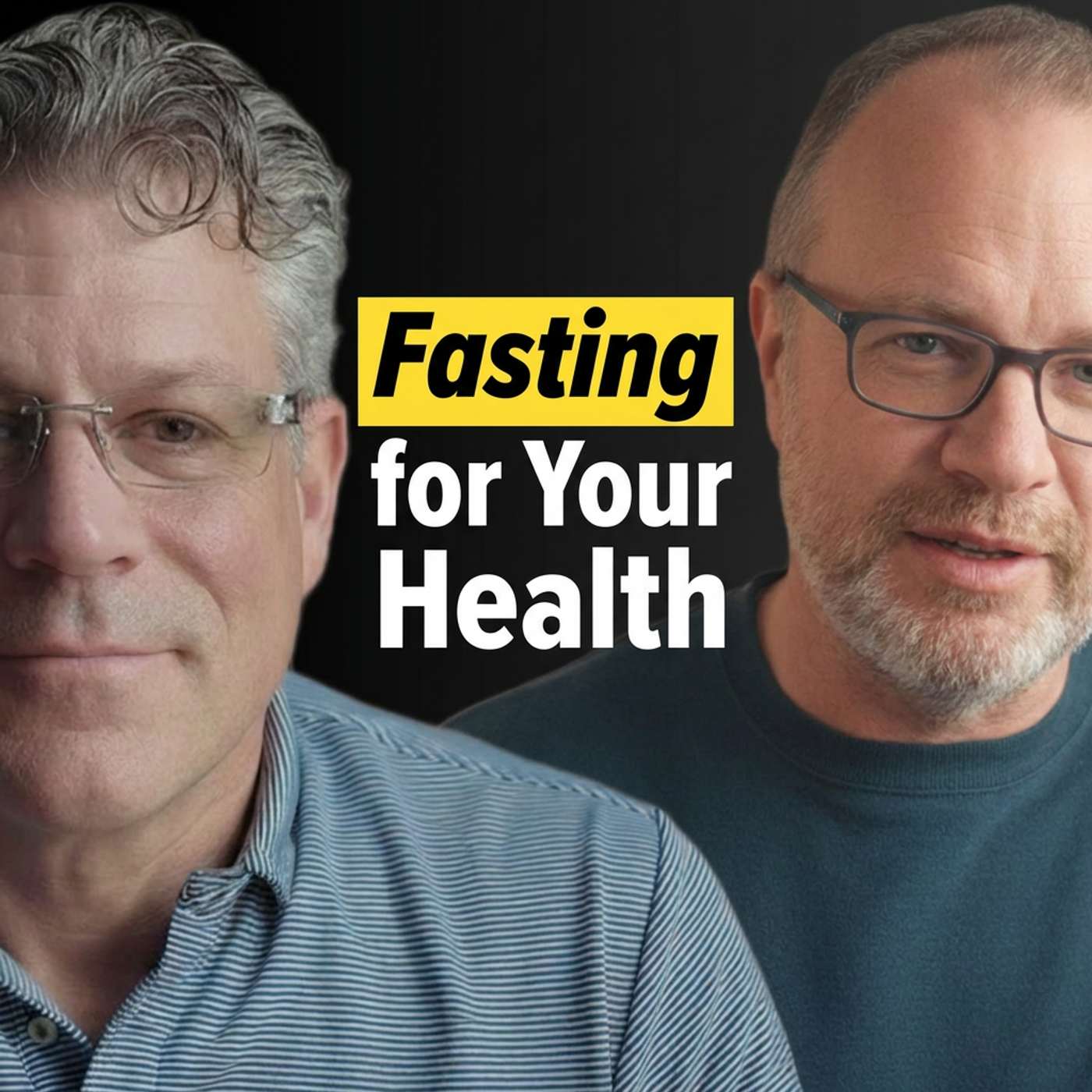
Unlock the true potential of your body with the surprisingly simple power of fasting—beyond just weight loss. Discover why fasting is more than skipping meals; it’s a profound reset for your mind, body, and health. Whether you’re curious about intermittent routines, long-term fasting, or the science behind cellular cleansing, this episode reveals how fasting can boost energy, improve clarity, and even reverse chronic health issues—all while reshaping how you think about food.Most people rush to breakfast as the most important meal, but what if giving your body a break from food could be the key to unlocking better health?
Takeaways
We break down the different types of fasting—from quick 24-hour fasts to extended periods of autophagy—and explain how your body cleans out toxins, fat, and dead cells while you sleep. Learn why long-term fasts, carefully monitored, can be a game-changer, and how to avoid common pitfalls like dehydration or hunger headaches.
Scott Schaper: for people are new to fasting, Why would people do a fast?
Brian McMaster: Yeah. Well, I mean, I think the first thing that comes to mind is people want to lose weight. I think that's the, I think that's probably the number one reason that's probably 80, 90 % of why people do it. But there are so many more benefits to fasting just losing weight, but certainly that's a benefit as well. But, â know, and then for me, I the probably number thing is clarity. I think you get onto it. doesn't have to be a lengthy fast either.
Scott Schaper: Yeah.
Brian McMaster: but I think even a day, 24 hours, â it can really reset your body and reset your mind. â I'm down in the dumps or just feeling off, â sometimes just a matter of eliminating those things you're putting in your body and it changes things drastically. So yeah, it's good. How about you?
Scott Schaper: Yeah. I like them. At this point, I fasted so much in so many different ways that it is a mental thing for me. It's all about my mind. It's a little bit of mind over some determination, some will, mind over matter. It's less about battling food and cravings. It's more about that clarity, that reset. So let's talk about what a fast is because it really is at least 15 different things. fasting is just break from food. And I would dare say that everybody fasts every day, overnight. So there's six, eight, 10 hour window where you're not eating at all. And â people are fasting. That's why breakfast is called what it is, because you wake up and you break your with something to eat. So no surprise there that people are fasting eight hours. â So if you If you elongate that a little bit, can think of just go four hours. you can think about skipping breakfast or depending on when you finished your meal, you can go all the way to 10 a.m. and have a mid-morning snack, banana, nuts, something like that, something really healthy and break your fast after 12, 14, 16 hours. And if you do that on a regular basis, that's intermittent fasting. So like you said, it doesn't have to be long term. but there's an enormous amount of benefit in intermittent fasting throughout the week. you can do it every day for sure. I'd like to break it up and do it throughout the in various schedules because I'm a big fan of body adaptation. Keep your body guessing and keep adapting. So I think adaptation is the key.
Brian McMaster: And if you think about it, mean, a really good way to get into this is â just you said with breakfast is breaking your fast. â I if you get eight hours or nine hours of sleep, you're already nine hours into your fast. So, â I it's kind of a head start, â but trained our bodies so much to, â gotta breakfast, I gotta have breakfast, â or the part of it too is the world today or the media or whatever.
Scott Schaper: Yeah, right.
Brian McMaster: tells you that you have to, breakfast is the most important meal of the day. I think there's a lot of people that would argue that that's not true and that you really do need to give your body a break because that's what we're doing when we're sleeping, we're giving our body a break. And that's why a lot of times, and I'm one of those people I don't eat after seven o'clock because I go to bed at 10 and I want my body to be digesting that food before I go to bed and then I'm. I'm good to go and my body has an opportunity to use that energy to repair itself. So yeah, there's a tremendous amount of benefits to fasting, but you can certainly get your head start if you keep that in mind.
Scott Schaper: Yeah. What's the, of long-term fasting, so that's intermittent fasting. People can intermittent fast in a number of different ways. I'll just kind of cover this just to define it. It's not a long-term fast. It's short-term. It's intermittent. So you go a day in, day out. Some people do a normal calorie day and then a 500 calorie day, normal calorie day, 500 calorie day. And then the other three days are normal. So they used an intermittent calorie restricted fast during that one day. another way to fit in an intermittent fast. Some keep elongating the window of when they had their last meal, â or tighten the window where they're going to eat to four hours, six hours, or eight hours. So maybe they'll have lunch at 11 â and by six, seven PM that next day, squeezing all their calories, a full day's worth of calories, by the way, 2000 calories an eight hour window. So there's a, if you wanted to do a search, can say, can search is when I eat as important as what I eat. And so that's the theory of intermittent fasting is changing the windows of what you consume calories. Hopefully the calories you are eating during a fast are actually better calories. â not just eating.
Brian McMaster: Yeah, don't go ahead and milkshake or a steak.
Scott Schaper: Yeah, exactly. If you're still eating the milkshake and french fries during your intermittent fast. â I would say that's the mindset change with any type of fasting protocol is the mindfulness that goes into what I â eating, â just changing the window, but changing the quality of the food as well.
Brian McMaster: Yeah, and I think an important point there is you will lose weight. if you â a four or eight hour eating window and you eat cheeseburgers and â kind of stuff, you will lose weight. There's no question about it. â I always â to use the analogy, think of gas in your car. If you put bad gas in your car, your car doesn't run properly. â you're just gonna magnify the, do wanna say, the symptoms â of â
Scott Schaper: Yeah.
Brian McMaster: what happens when you fast and if your body's cleaning itself out and it's cleaning garbage out, you're gonna feel bad, you're gonna have a headache, you're gonna have acne, you're gonna have, you know, there's, there's, and of course that happens more on longer term fast, you know, short term fast, you don't wanna scare anybody away, but in the same token, you know, garbage in, garbage out is a very true statement, so.
Scott Schaper: Yeah. long term, let's move to a long term fast that's longer than the intermittent windows where you're actually doing a 24 hour or longer all the way up to weeks worth of fasting. And that's, â that â think a short term fast is anything less than three days. A in day out fasting is intermittent fasting and over two to three days you're going to get into what is a long term fasting window. And what I think what you're chasing down there is
Brian McMaster: Yeah.
Scott Schaper: definitely cleansing and you're after two days you're going into a period of autophagy with your body, which is a strange word for people, but it's â amping up the amount of cleaning the cleaning cycle of your brain during sleep and your body during waking hours. period of autophagy â happens is there's a lot of cleansing that happens. â Heavy come out your out of their storage mechanisms. â Any type of toxins and actually if people haven't fasted and they're new to fasting they will find after three days They could feel like crap For a while â of all that bad stuff that flows into their bloodstream. You can feel it â
Brian McMaster: Yeah, absolutely. I've been down that road several times. As you know, you and I have done, and I'm not recommending this by any stretch of the imagination because you need to check with your doctor and that kind of stuff, but long-term fasts, I've done several three-day fasts, but I've done, I'd say several, probably 10, 20, 30. three day fast, but I've also done eight to 10 day fast just on nothing but water. when you do something like that, â you start to get past day five, day six, you're gonna wanna be checking your potassium and you're gonna wanna be checking your electrolytes and that kind of stuff because you can create serious issues doing that. â you had mentioned cellular autophagy â just for our listeners, that's basically dead cells â your body cleaning out dead cells. You have dead cells all the time, there's gotta be way to get them out of your system. And fasting is, just like it says, is obviously the fastest way to do that. Your body will excrete those bad materials. And to your point, Scott, that's where the headaches come in, that's where the acne comes in, that's where the night sweats come in, that type of stuff. That's just your body cleaning itself out. that's a good thing. â to get yourself through it, it takes â discipline, for sure.
Scott Schaper: Yeah, it's a huge anti anti-inflammatory process. so just to give people, everybody what the word auto means. That means self, but the phagy part of it is the Greek word for eating. So it's the self eating, meaning you're cleaning out all the bad stuff. A bunch cells, old cells get broken down, recycled and unnecessary components used to generate energy, create new building materials for repair and maintenance. happens in your sleep automatically. if you have a really good deep sleep. fasting activates that entire process really, really efficiently. It's kind of the miracle of the body. You have mini autophagy that happens as a normal course of business with your body, but, your body self heals. But when you go into fasting, the very first priority, metabolically in the body is to deal with foreign substances could be a bowl of jello could be cottage cheese, no matter how healthy it is, celery is foreign to the body. And your body will immediately go break it down, get all the vitamins out of it, use the calories store the water, move the fat around. And that's a process of the liver and the kidneys and everything else that goes into that. But while that healthy or non healthy foods coming in, the body's going to attack it, which means it halts all healing activities. and goes after that food and process it as a matter of priority. just to let you know, when you're not eating, your body is not doing all that and it's repairing. That's the kind of the natural, but you'll feel so much less inflamed. And by day four, you're really getting into some, you're feeling very good. The hunger, the hormone that causes you to be hungry drops away as well.
Brian McMaster: Yeah, absolutely. Yeah. Yeah, absolutely. that's, you and I have talked about this before, usually day three is my toughest day. When I get to, if I can push through to day four, really it's the first day. Get past that first day and then you got some momentum. But for me, when I was a little more unhealthy, it was really day three where I started to have headaches and that kind of stuff. And you really want to set yourself up for success too. You don't want to be. doing something overly stimulating or something that requires a lot of brain work or anything like that because you're gonna be groggy, you're gonna have brain fog, you're have things going on like that and you don't wanna put yourself in a situation where you're like, oh, I gotta eat something or I'm not gonna be able to get my report done or whatever. So you really wanna make sure you plan it and set yourself up for success too. Because again, I've broken many fasts because of being in that situation as well.
Scott Schaper: Yeah, whenever I do a â short, you know, a one, two or three day fast, am drinking coffee and tea during that. I call it a zero calorie fast. So it's water, coffee and coffee, you know, might have a calorie or two in the whole cup. So I'm, actually consuming maybe five, 10, 15, 20 calories in the entire day, having a little bit of tea, herbal tea. I don't put stuff in my coffee like milk and sugar. or sweeteners, but I also will have a little salt and I'll have my electrolyte mix under my tongue or in a glass of water, something like that, because electrolytes have to be replaced. Not necessarily in three days, but you'll use them up by day three. So I just go ahead and replace them.
Brian McMaster: Sure. Yeah, absolutely. I think it's important too to say that hunger comes from the that your hunger pains are, number one, they're trained because â time eat, your body â that clock, but also as liver is cleaning the sugar out that you have in your liver. that's what's making you hungry. It's getting down to that where your liver goes into ketosis, which we can talk about as well. But 24 to 48 hours, once your liver has those sugar stores cleared out and it starts to make ketones, that's when the magic really starts to happen from a fat burning standpoint as well. And that's another thing that's kept me going. It's like I start to think about, okay, I'm on day three, what's my body doing? It's attacking senescent cells, it's doing this autophagy process, it's attacking fat and I'm burning fat. So â think it helps â â back and revisit. When I look over my journals and those kind of things, it helps to go back and revisit what's really happening during that day. â I think that keeps the motivation going as well. So that helps you get through some of those â effects.
Scott Schaper: Yeah, if I'm going into a fast, I generally will look at my next three days. If I have a business luncheon, I generally will not have a fast over that. try to manage my social. Like you said, where are the stressors? â I want to create three days of peace and I can have peace during my workday. I can have really productive meetings, especially if I'm working remotely or having a remote session like this. â
Brian McMaster: Yeah. Yep.
Scott Schaper: But I try to aim for can I have relative peace during this whole thing or what's going on? Obviously, I'm not traveling on vacation. But one thing that I do is I almost always have a short term fast on travel days because I can just skip the airport. So wake up. I have a flight at, you say 8 a.m. So I have to get to the airport at 6. So I'm up at 5, you know, just back the clock up. I don't get to my destination till noon.
Brian McMaster: But yeah, there's.
Scott Schaper: So I'll just plan on eating dinner done by five, have a 24 hour fast or have at least a 30 hour fast all the way to the following day's lunch because anything in the airport is going to be bad, right? so â if I have a latte or something, fairly but there's seed oils and, you know, dairy or whatever is inside there, some sweetener, just skip it all. Uh, if I don't do that, then I'll find myself mindlessly grabbing a snack, opening up a bag of whatever it is, uh, stopping by someplace and grabbing a sandwich. It's not, it's not good that I set up my vacation for, I don't know, not feeling a hundred percent when I get there. So I use my airport days as a strategy to, uh, have a short term fast going into my vacation.
Brian McMaster: It's a great place to get steps in to a lot of people will go to their gate and sit down. You know, my coach tells me all the time. He's like, man, you know, you got an hour later, that's a great way to get 10,000 steps in. So yeah, yeah, absolutely. And there's no end to echo your point. There is nothing good in the airport. mean, unless you're in LA or Seattle or someplace like that, there, there might be a juice bar or someplace like that, that has some fresh fruit and you know, those kinds of things and organic stuff as well. I mean, it's.
Scott Schaper: Yeah, totally. Easy. Yeah.
Brian McMaster: It's becoming a thing that certainly in the Midwest you're getting ribs and packaged goods. So, you know, it's definitely not good to eat in the airport.
Scott Schaper: Yeah, we got stuck in. We got stuck in the Seattle airport for four and a half hours back and forth to Vancouver. And I did have a couple of business calls that I took, which was nice, but we walked all three terminals and picked a great little, like you said, organic joint that was, didn't look like a chain and they were, was, it was amazing that they had kind of a juice bar, salad bar, type of stuff. And so we ate there.
Brian McMaster: Yep. Yeah. It's, it's common. It's, it's, you know, a long line of fasting too. It's, you know, when I was doing it, and I'm sure when you were doing it too, it was really poo pooed, you know, was that there's a lot of people that come out and say it's not healthy for you and you have to eat something, you know, and all that kind of stuff. you know, if you're not noticing it, there's a movement in this country. It's still a very small portion of the country and really in the world. but it's a very small portion, but there are people who are really starting to demand, hey, look, I want something healthier to eat. I mean, even the fast food restaurants are trying to get themselves to a point where they're having organic salads and that kind of stuff. So it'll definitely be available in the future for sure. But yeah.
Scott Schaper: Yeah. Well, let's talk about what fasting isn't because some people will just equate it to this term starvation diet. And I would say that starvation is a clinical condition of you can starve yourself if you wanted to. However, if you have excess pounds, like I may have an extra 15 pounds sitting around my waist, 15 pounds times 3500 calories per pound of fat. You know, I'm talking about what 45,000
Brian McMaster: I'm
Scott Schaper: extra calories that I'm walking around with. And so if I happen to eat only 1200 calories in a particular day, where do you think my body is not starving? It's that thousand miscalories from fat from my waist. â
Brian McMaster: Yeah, visceral fat. I mean, we all have visceral fat around our organs. And it's done properly, you know, your body's, â I we talk about this in long-term fasting, right? â First burns the sugar out of your liver, and then it starts to produce ketones and you start to burn fat. â And then it gets past a certain point, then your body starts to look for anything that doesn't belong.
Scott Schaper: Right.
Brian McMaster: So it could be tumors, could be, you know, just kind of abnormal part in your body, your body looks for food. Again, that's why feel the way we do because it's burning something that's not good. And it's amazing the body adapts and figures all that stuff out for sure. But you're definitely, to get yourself to starvation, I mean, you gotta along
Scott Schaper: Right.
Brian McMaster: I mean, I know people who have done 25 to I know people have done 40 day water fasts and of course you you look you know, very staunch and you know, just just very you know is not the right word, but you look very thin But know and I've heard this before too. â that person doesn't look healthy. Well, what does healthy look like? I mean in order me to know what healthy looks like I got to see my metrics I want to see my blood work. I want to see my heart rate my pulse, you know all that kind of stuff
Scott Schaper: Right.
Brian McMaster: And, you know, again, it's just, it's looking at the outside, not on the inside. So, yeah, it's not, it's definitely not starvation.
Scott Schaper: I went, so last year, so in January, I went to my doctor and I told him I wanted to start a 21 day fast. And I wanted everything to be measured along the way. So let's start with measurement. And so then we did weekly blood tests and monitor it together. So the whole thing I felt was kind of an experiment, right? Remember we talked, then we had a podcast about nourishing experiments.
Brian McMaster: Mm-hmm. Yeah.
Scott Schaper: So this was an experiment. He felt it was safe. One thing that happened is I have elevated blood pressure. And after three days of fasting, my blood pressure was 120 over 80. Just auto-corrects itself. The whole body goes into a state of normality and cleansing, which is really cool. I knew that would happen because I've done longer fast before. I only made it 15 on the 16th day. I told Suzanne, I'll do this as long as it's safe.
Brian McMaster: That's something.
Scott Schaper: long as my doctor says it's okay to go forward and if I'm feeling it. So the key to fasting is listening to your body. Like with ears to the ground, you have to pay attention to everything that's going on. do I feel? â on an â basis, not every hour, not every meal time, it's how am I feeling right now and always pay attention. I remember waking up that â day feeling hungry for the first time.
Brian McMaster: Yeah.
Scott Schaper: And I said, if I feel this way at noon, I'm going to have a bite. And that feeling didn't go away. And that was my body saying, you're And hunger changes. I'll tell you that your definition of hunger changes when you know, when you've listened to your body and you felt what fasting is about your hunger, the definition of hunger changes.
Brian McMaster: Yeah, yeah, absolutely. It just sounded just out of curiosity. What was the first bite and how did it taste?
Scott Schaper: Yeah, I think I remember eating a banana or boy, I'm making that up. did not. I don't what the first thing I ate was. It could have been leftover soup.
Brian McMaster: Yeah, so a lot of people.
Scott Schaper: Bone broth. Maybe I maybe I did bone broth to break it because me and my doctor talked about that.
Brian McMaster: Yeah, lot of people will do soups or bone broth or something like that because, know, again, for our listeners, you once your digestive system shuts down, and there's actually a â story one of the fasting books I've read. I don't recall which one it is at the top of my head, someone did â a 25 or 30 day fast and they went out and ate a ribeye and they died. I mean, it literally killed them. Because, and again, not saying that fasting is not good, but you gotta have a system where you get yourself back up, because your juices gotta start flowing again, your digestive juices aren't going, been shut down so that your body can repair itself. â I think that's an important point. What do you put in? â that's probably one of the number one questions I read in these books about fasting â what do I eat? What do I eat?
Scott Schaper: Yeah.
Brian McMaster: And bone broth is a great option. I've also done like stewed tomatoes, something really easy break down, berries, something along those lines. And I'll tell you after â an eight or day fast that raspberry tastes like the most amazing thing you've ever eaten in your life. â So. â
Scott Schaper: Yeah. Yeah.
Brian McMaster: But then you gradually, that's your first meal is bone broth and a couple hours later you do that again or you can add some solid food in. But you'll find too that your system, and I know you know this, your system will start to work again and you'll go to the bathroom regularly or right away. Yes, very fast.
Scott Schaper: very fast. Usually within six, eight hours, your body's like, okay, we're done with that. Let's go. But I do think in the in the days following a fast, I'm very aware of exactly what's going into my pie hole, right? It's like, do I want to put this in? No. And so you end up preserving it's like when you've cleaned the house for guests, and then the next day, you're like, the house never looked so good.
Brian McMaster: Yep, yep, absolutely. Yeah. Yeah.
Scott Schaper: And then you're like, I'm not going to like trash it up. Right. So you tend to keep it, keep it clean for the next few days until you slip back into your old habits.
Brian McMaster: Yeah, and along those same lines too, as soon as you eat something that's bad for you, you might feel bad. You not feel bad much mentally, but feel bad physically. â it's like, wow, â body doesn't like that. You know? So it's good thing all around.
Scott Schaper: Correct. Yeah, let's take a quick break and talk about what type of, â are we consuming right now? What are we eating? What are we reading? What do you got on your desk?
Brian McMaster: What do I have on my desk? that has to, we should name it what's on the desk or something like that. got, well actually I do have, we are about to start filling for a company called Level Up Health. LV, LUP, Level Up Health. This guy's name's Kyle. â He owns company, it's out of Australia. And these, let me if I can get that up there.
Scott Schaper: Yeah. Hmm.
Brian McMaster: This particular one is called GI repair and I love this. love to travel with this as well. But he's, you've heard of peptides, obviously. He's perfected, â obviously a genius. He's perfected oral peptides. So a lot of peptides you can't take orally because of the breakdown in the stomach and they don't get into your system. So â they're â needles that kind of stuff, but he's perfected the. the formulation to have oral peptides. I've been taking this stuff. I also take a product, I don't have it on my desk, called Neuro from him, â is the first brain product â I think I've taken that I've actually noticed a difference. And products are not inexpensive, but it's got so much stuff in it. It's absolutely phenomenal. So level up health, definitely check them out. They're not a sponsor of the show yet, but.
Scott Schaper: Hmm.
Brian McMaster: But we'll definitely give a plug for Kyle and his company because they have phenomenal products. that's me. â
Scott Schaper: Yeah, what about my, â the one supplement I decided to add. drink a tablespoon or two of oil every morning. usually olive oil, but I wanted to add another one. â use olive oil and almond oil as part of my skin routine. morning and night. â So thing that â came my kind of feed on YouTube is a black seed oil.
Brian McMaster: Mm-hmm. I can't tell. I can't tell by the way. â yeah.
Scott Schaper: It tastes like a taste like licorice or anise. It's a combination of licorice and cumin almost, but it's a. Yeah, yeah, it's. The one I have must be a little bit mild, but it's good. â It's much. â I like it. So I swapped it. So I swapped back and forth one morning olive oil next morning, black seedle, and it's â
Brian McMaster: I think it tastes like furniture polish myself.
Scott Schaper: It's been fine. I like it. It's great for skin, brain, digestive, immune support and cardiovascular health. And I can't find any, find any downsides it. Or â haven't a lot of people poo pooing it. Not a lot of, yeah, but watch out for if you have. I've found it to be pretty, pretty safe. â Any, have you it or, or any experience?
Brian McMaster: Yeah. I have used it in the past. I've actually used it as protocols. got, you're with Kratom and I'll just share, â I doing these little drinks with Kratom and I got addicted to them and I to stop and I had all these just terrible side night sweats and all kinds of stuff. â And as part my protocol to get off of that, which we can do â a whole podcast that I'm sure.
Scott Schaper: Yeah.
Brian McMaster: As part of my protocol black seed oil was in there and it was it was for those benefits. It was for digestive it was for brain There's there's I mean you there's a list of 20 things that black seed oil does and just The taste as unique for sure. â But yeah, yeah, absolutely. â
Scott Schaper: Yeah. Well, I also will have a part of my snack routine and I don't snack a lot, but when I do, it's usually a little bit of, â a yogurt, kind of a cashew yogurt with blueberries and walnuts. â I just have about a quarter cup of that. So it's a pretty small snack, but, â yeah, having walnuts, after black seed oil or berries just kind of like covers up that taste. it's kind of gone in about 60 seconds. â
Brian McMaster: Yeah. clump, cleanse the palate. Do you do oil pulling? Do you do that at all? Have you?
Scott Schaper: Cleanse the palette. I have in the past, haven't a habit. used do it with coconut oil or olive oil. â â something that I never formed a long routine for.
Brian McMaster: Yeah, I have I have a, dentist, â this is a story for another time too, my dentist is in Phoenix and name's Aniko Loud. She's just super, I think arguably she's the best in the country, but she's been working on, you know, removing fillings and you know, all that kind of stuff â with mouth and I don't have any metal in my mouth anymore, â but been doing oil pulling and the last time I was in there, she said, what are you, I think actually said, are you doing â oil pulling?
Scott Schaper: Yeah. Same.
Brian McMaster: She's like, your gums are healthier. Your tongue is clean. You know, it definitely a difference. â I do it every morning actually. It's part of my morning routine. â So I use coconut, but I use â an ozonated oil. So it has ozone in it as well. And ozone is, mean, even when I go to the dentist and go to a NECO, does an ozone cleaning on your teeth.
Scott Schaper: You do it every night. which oil. Okay.
Brian McMaster: So.
Scott Schaper: There's a, there's a drop I have there organic herbs. It's some essential oils that are really good for your oral microbiome. So I've just kind of like one, two, three drops with a little spoonful of coconut oil run that for about 10 or 15 minutes. Uh, has been a pretty good, I need you to start that back up. Thanks for reminding me of that.
Brian McMaster: Yeah. Yeah, absolutely, it's definitely a great part of the oral routine and I don't think a lot of people realize. we can associate this to fasting too. Your tongue â look like Mingeo Green. I mean, it will have a lot of stuff on it because as your digestive system cleans itself, you're find that it starts to build up. So part of while you're as well as scraping your tongue, you can get these little tongue scrapers off Amazon. make sure they're stainless steel or copper and scrape your tongue. You'd be surprised what you pull off your tongue. is absolute, yeah. The bacteria and things that collect in your mouth are unbelievable. And it's just, it's a good part of oral hygiene anyway, but it's important to link it to fasting because it will, you go long term, you will have that on your tongue for sure.
Scott Schaper: Hmm. Yeah. Yeah. The body â just tends to sweat out, start eliminating through any poor or whole bad breath. â Obviously, removal throughout the day, which is different normal â kind of poops, if you will. â But
Brian McMaster: â yeah. Yeah. Yeah, sure.
Scott Schaper: There is a I love it because of the anti-inflammatory. You know, I'll say that the US is one of the most malnourished countries on earth. And a lot of people, when they think of malnourishment, they think of, you know, those those commercials with all those â kids in Africa, with those distended bellies â and those round bellies look like they swallowed a basketball. But as you walk around today in your life, notice how many of those round basketball bellies you see.
Brian McMaster: Yeah.
Scott Schaper: just around you, it's more than 50%. And that is the very definition of malnourishment. It's just that we have an excess problem, not affordability or availability problem here in the US. Ours is just the opposite. And so total convenience problem. And you can tell people are having, just look at all the diseases that you didn't hear about when you were growing up as you watch TV and see drug commercials.
Brian McMaster: Absolutely. Yes. convenience problem.
Scott Schaper: There are so many more diseases and you know, it's just the, we've talked about this, the economy of pharma and big pill, right? So I'm gonna give you this pill and cover up this symptom. It's just symptom management. And because this pill caused this symptom, I want you to take this pill. And now you can't have good sex anymore, so you gotta take this pill. And you just start stacking more and more pharmaceuticals into your body, ruining your gut.
Brian McMaster: Yeah. Yeah.
Scott Schaper: microbiome causing more sickness causing the â need for antibiotics which reduces all sorts of microbiome in your body and it's just a bad thing and fasting will just undo all that if you give it enough time.
Brian McMaster: Yeah. And I'm all for health through science. I mean, I think there tons of excellent excellent, there's excellent drugs out there. There are things that have been tested, tried and true over the years. â Metformin's of them, arguably it's like the most tested drug in the history drugs. And, you know, are ones that can be useful, â but you know, like you're saying when you're stacking them on top of it, I...
Scott Schaper: Yeah.
Brian McMaster: I think that's why my father passed away early because he trusted, he always said the doctors are keeping me alive, these pills are keeping me alive. And it's like I'd open up his medicine chest and he had 15 different drugs he's taken. It's like, dad, do you know what all the side effects are to this stuff? No, no, my doctor just tells me to take it. he literally took a pill for his bladder cancer and then it created a problem in his liver.
Scott Schaper: Right.
Brian McMaster: So then he had to have a pill for his liver. And then he took another pill because he had to have a pill for his kidneys. know, it's just a â circle. And I think it was, â it Hippocrates that said, let food be the medicine? â think it was. And where we need to get back to, back to real, back to what real food looks like instead of â something a package. I mean, we're packaging everything these days.
Scott Schaper: Yeah. Yeah, 100%. So when I think about, people are very curious about the fasting I do. I've taught it. Taught it. I just kind of go over some of the protocols I use with my employees, just kind of telling people. The smallest intermittent fasting, I think it's always good to bring every type of health move to your doctor. But I think â intermittent is very safe. So is â short-term â going day.
Brian McMaster: Yeah.
Scott Schaper: When I say a day, mean 24 back to back hours. So I'll have, I had dinner last night, salmon and sweet potato. â then if I have dinner tonight, eat a salad. That's a 24 hour fast bookended very healthy meals. And â try to bookend my fast with grease or bad or what I'll call dirty, â even if keto.
Brian McMaster: Yeah.
Scott Schaper: dirty keto, burgers, fries, stuff like that. If I'm going to have a fast, I bookend it almost for two or three days. I stack in a very healthy protocol of meals. It's really easy on the body, healthy food. And so I can go right into a fast, no problem, and go 24 hours easy.
Brian McMaster: Yeah. And everyone's done it. If you've had a blood test where your doctor says don't eat anything or drink anything except for black coffee for 24 hours, you've already done it. I mean, and arguably people still complain about that, but done it already so you can do it again. So this time you're just doing it with â health in mind as opposed to your blood test or whatever surgery you're having or whatever.
Scott Schaper: So speaking of surgery, good segue. I have surgery coming up â week, â week from today, â week, one month from today. It's a tissue repair hernia surgery, pretty routine. But I'm gonna start working with my OP team there, my pre-OP team there, They want me fast for â 12 hours. And like, come on, â give me a that is ideal.
Brian McMaster: Mm-hmm. All right.
Scott Schaper: that takes into account, you if I have an empty stomach, you know, this, I'm working on the area where food moves through. So let's go easy on that area. So I would, I'm going to work with them about a 72 hour fasting protocol. Fasting is more beneficial after the surgery than before. â how about now testing?
Brian McMaster: just going.
Scott Schaper: Testing, testing. I can always re-record this.
Brian McMaster: muted or anything. I can't hear myself in my...
Scott Schaper: Let me see if I'm muted.
Brian McMaster: things is going on here. See ya. see you're muted.
Scott Schaper: How about now? Are you good testing? â weird. Okay, got it. Okay, I went ahead. I can put a mark where this happens and just trim off this minute.
Brian McMaster: Now I can hear you. That is weird. Okay. There again, I lost you again.
Scott Schaper: I'm not me. Okay, how about testing now?
Brian McMaster: Now you're not muted, but. That's weird. I can't.
Scott Schaper: Hmm.
Brian McMaster: I guess we weren't supposed to talk about fasting.
Scott Schaper: or surgery.
Brian McMaster: I can't hear you. What is up here? I'm not muted, but I cannot hear you. Okay.
Scott Schaper: Hmm. Let me leave and come back. Be right back. Testing, how about now?
Brian McMaster: gotta be on my end. My stuff is working. â
Scott Schaper: Did it.
Brian McMaster: It drives me crazy. Let â see here.
Scott Schaper: testing.
Brian McMaster: speaker. to be a speaker. Try it, try again. I can hear you on my... â
Scott Schaper: Can you hear me now?
Brian McMaster: Try that once.
Scott Schaper: I just went to my...
Brian McMaster: I can hear you now.
Scott Schaper: Testing now. Okay. I just plugged in my microphone again, just took it out and replugged.
Brian McMaster: can hear you now. Really weird, okay
Scott Schaper: Yeah, OK, good. Let's stick with it. Yeah, I can trim that. I can just trim that piece out. So I was saying that a surgery fasting after surgery is way more beneficial than before. So I'm going to do a vitamin D protocol. How we do it on sound.
Brian McMaster: Good, I can hear you.
Scott Schaper: So I'll do a vitamin D and then afterwards I want to talk to them about a three day fast and, â some juice fasting, which is doing a non-eating, but only having certain juices for, to just promote healing. If my body is going to be traumatized by a surgery, then why don't I eliminate digestion as an activity is the theory for three days, four days, and just let my body do nothing but heal.
Brian McMaster: Yeah, makes sense.
Scott Schaper: And I want to try the BPC 157 because that has a lot of tissue repair.
Brian McMaster: Yeah, absolutely. The BPC is phenomenal. also red light therapy too. But yeah, juice fasting's another one I've â done. actually done a 72 day juice fast. Nothing â for yeah. I have notes â and all stuff. Yeah, and I lost.
Scott Schaper: Mm-hmm. What? No kidding.
Brian McMaster: Gosh, I was my lowest weight ever. was like 185 pounds. and I weighed 212 I â this morning. So it was, it was pretty, it down there. I was, I was definitely looking strong.
Scott Schaper: What do you know? Okay, yeah. 72 days. Tell me what type of protocol you use and what type of juices you use.
Brian McMaster: So lots of lots of so I would use a celery base. So the and celery is as tough because it gets bound up in the juicer and that kind of stuff. But celery, cucumber would give it a lot of a lot of volume and lemon. that would give like a lemon tang. And the celery would replace all the electrolytes, right? Because it's salt and that type of stuff. And then â
Scott Schaper: Mm-hmm.
Brian McMaster: you know, I might throw in a beet or, you know, something along those lines for kidney health and that type of stuff. the main one I would do was the celery, cucumber, and apple, and add a lemon. It was like a salty lemon juice, and it was really, really good. And that's what helped me kind of get through because I had a consistent juicing protocol. But when I started to get bored, which happens really quickly,
Scott Schaper: Yeah.
Brian McMaster: You know, I'd add in like I do watermelon juice. You know, maybe once or twice a week, I would do a pineapple juice, â was phenomenal for your liver because it has that choline in it. So, yeah, it was that that was the biggest thing was you would get bored. So I would look up juice recipes that â you know, like like pizza juice, you know, would taste like pizza, you know, but it was tomatoes and parsley and, you know, that oregano and that kind of stuff. â So.
Scott Schaper: Mm-hmm.
Brian McMaster: Yeah, that was phenomenal. I have to send you the notes and the log, because I logged every day what I was feeling, what kind of juices I was having, that kind of stuff. It was phenomenal.
Scott Schaper: Wow. â What about like a smoothie where you're crushing up and not juicing like spinach a whole bunch of spinach So then you're getting the spinach juice and the fiber along with it. So you're almost eating spinach that has been broken down Where's the only juice?
Brian McMaster: Yeah. I mean, you're just, you're, you're essentially from what I've learned, you're still eating because your body still has to break it down and it fills you up faster too. But if you're getting the juice as well, then, then it's like a double, it's a double threat, you know? So yeah, it's good stuff.
Scott Schaper: Yeah. Very cool. â I have I have my own stand up meeting with my employees here in about six minutes or eight minutes and we're what minute 45 just about had a three minute technical break there. So no big deal. I'll cut that out. But what last minute thoughts on how about a challenge that we go into next week if we can issue a challenge to people?
Brian McMaster: Yeah. Awesome. Yeah, think going along with the fasting protocol, try a dinner to dinner fast. It really is easy to do. You're â starving yourself. You're â to the next day, or you're not going to the next day without food. â think dinner to dinner is â a great challenge for yourself. Just do it one day this week â see how it works. I you'll be delightfully surprised.
Scott Schaper: There's a lot, there's not one, not one size fits all. There's 16 eight, â window fasting, five to alternative day fasting, cycling between periods of eating and not eating. There's religious fasts, â long-term how you consume water. There's, there's a Daniel fast, which is restricting certain foods. like, you know, all sorts of, there's sorts of fast. There's not just one. So find one that works for you. I would say this, talk to your healthcare professional. If they poo poo fasting as dangerous or I haven't seen any benefits or things like that, I would find a different healthcare protocol or healthcare practitioner because there are so many benefits. It's all science, but I want you to be careful. it. Be mindful about what you're eating and start with us. Start with a short intermittent fasting window, skip breakfast sometimes go all the way to lunch and see how you feel. And with that. â Let's sign off and we'll see you guys next week
Brian McMaster: Awesome. Take care, buddy.