


How to Say NO Like Your Business Depends on It

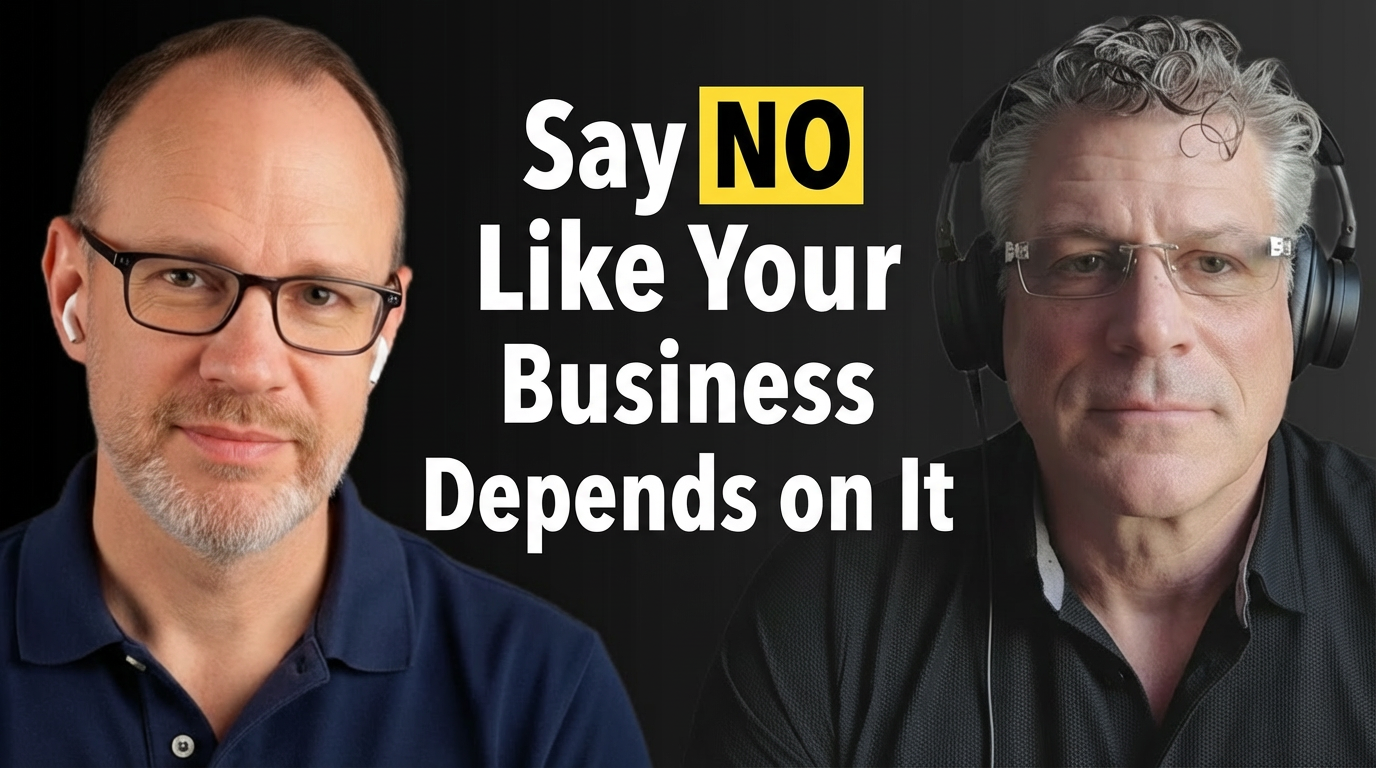


The conversation explores the power of saying no, setting boundaries, and the hidden costs of always saying yes. It emphasizes the freedom and empowerment that comes with the ability to say no and curate what goes into one's life.
The conversation dives into building a culture that respects time, the power of saying no, and strategic yeses and priorities. The discussion emphasizes the importance of protecting time and making intentional decisions about what to say yes or no to.
Takeaways
- The power of saying no as a strategic business move
- Freedom and empowerment in saying no Exploring the world of Grisham books
- The power of saying no and strategic yeses
Chapters
Scott Schaper: Well, I love the topic you came up with today. I think it's going to resonate with a lot of our listeners. It certainly resonates with me. I think I've been doing this a little bit better in the last six months, just where I am in business. But I'll get into this. In a world that rewards businesses, learning to say no has become one of the most powerful, overlooked leadership skills. Because as we know, every yes comes with a cost. A cost to your focus, your energy, and often the very goals that matter most. So I have four different parts to this podcast. We will explore how protecting your time is not selfish, it is strategic, and why saying no more often might be the smartest business move you can make. So we will start with boundaries and burnout, and the myth of always being available.
Brian McMaster: Love it. I think a lot of us have this innate desire to keep everybody happy, at the sacrifice of our time. You and I have talked several times about Rhonda and adding administrative help and how that changes things. Now Rhonda is the gatekeeper. Emails, phone calls, all that kind of stuff.
Scott Schaper: Right. People pleasing.
Brian McMaster: Which helps tremendously because she comes to me and says, I got this email, do you want to do this? But even still, you get invited to something like a golf tournament where Patrick Mahomes is going to be there. What happens with me is I say yes to something 30 days down the road, and when it gets here, it is not an opportune time. At the time it sounded like a great idea, but things always change. I have always been a yes man. It just sucks your time. You say yes to enough things and your calendar fills up. Then you find yourself disappointing people because you committed. It becomes a challenge. But it is okay.
Scott Schaper: I do the same thing. I will say yes. I was just asked about a trip in the summer of 2027. Parts of it I want to do, parts I do not. It is two and a half weeks in Portugal and the Azores. I think I want to do it, but I wonder what the right way is to say I am thinking about it.
Brian McMaster: Probably just like that. A good tactic is instead of immediately saying yes, say you need to think about it. Ask, when do you need to know by?
Scott Schaper: Let me go back on that. The “because” part. One thing I have learned in the last six months, do not explain. You do not need to. No one cares.
Brian McMaster: Yeah.
Scott Schaper: It is like an employee explaining everything. Just take PTO. I get it. Just say you are sick. I have decided it is not for us at this time. Keep me on the list for next time. End the conversation.
Brian McMaster: That is a good point. I am an explainer. I want people to understand. But you do not have to explain. Nobody cares, and it can get you in trouble. Less is more. If you start explaining, it opens the door to more questions.
Scott Schaper: Exactly. If you do not say no, you are saying let’s do it later.
Brian McMaster: Or worse, someone invites themselves along. It can go down a rabbit hole. You have to exercise that muscle.
Scott Schaper: As business owners, there is a lot of talk about open door policies. Accessibility does not equal value. There is value in communication, but it must have boundaries. It is not limitless.
Brian McMaster: My coach talks about time blocking. He said he could be in work mode and his son could come up with big news, and he would say now is not the time. It sounds harsh, but if you do not do that, people will monopolize your time. The key is scheduling time, even with family. If you are constantly shifting things, you cannot be efficient.
Scott Schaper: Whatever you say yes to, honor it with full attention. That goes for family, friends, and business. Protecting your time is protecting your energy.
Brian McMaster: It feels clunky at first to schedule time with family, but when you commit and are present, you get so much more out of it. That makes saying no easier.
Scott Schaper: Let’s talk about the hidden cost of always saying yes. There is an obvious personal cost, but what about the smaller costs?
Brian McMaster: It builds up. I have said yes to things that almost destroyed me. Time, frustration, and strained relationships. When you say yes and cannot follow through, it damages trust.
Scott Schaper: I like that you used the word freedom. Saying no gives you the freedom to align your life with your values.
Brian McMaster: Exactly.
Scott Schaper: There are times when saying yes is right. Like when we went shooting. That was an investment in relationships.
Brian McMaster: It checked all the boxes. Time with my wife, time with friends, learning something new. Easy yes.
Scott Schaper: Saying yes when it aligns with your goals makes it powerful.
Brian McMaster: Agreed.
Scott Schaper: Let’s talk about building a culture that respects time in business.
Brian McMaster: Most cultures do not allow people to say no. Leaders need to create an environment where people can make decisions, even if that means saying no. If people are afraid to speak up, it hurts the business.
Scott Schaper: Scarcity creates value. That applies to time as well.
Brian McMaster: Absolutely.
Scott Schaper: We combat meeting fatigue by limiting meetings. No unnecessary attendance. No one-hour internal meetings. Meetings start at 15 minutes past the hour and last 30 minutes. It creates buffer time.
Brian McMaster: That is efficient.
Scott Schaper: We also create scarcity in onboarding times. That protects our schedule and billing cycles.
Brian McMaster: That is a great system.
Scott Schaper: Another idea: two 45-minute blocks per day where employees can drop in. It creates structure and availability.
Brian McMaster: It all comes down to living by your calendar. Block everything. Do not leave anything to chance.
Scott Schaper: Also, no same-day scheduling. Give yourself space to prepare.
Brian McMaster: That is critical.
Scott Schaper: When you protect your time, every yes becomes more powerful because it aligns with your priorities.
Brian McMaster: Exactly.
Scott Schaper: Let’s wrap up with a challenge.
Brian McMaster: Exercise the muscle of saying no. Put a reminder somewhere. Make sure your yeses add value.
Scott Schaper: Keep the end in mind. Protect your focus, energy, and impact. Say no at least once a day to something that does not align with your priorities.
Every time you protect your time, you protect your impact. Leadership is not about doing more, it is about doing what matters most with clarity and purpose.
Brian McMaster: I like acronyms. Yes means you are even stronger. No means no options. Use that as a guide.
Scott Schaper: Perfect closing thought. Thanks for listening.
Brian McMaster: Thanks. Take care.
Confidence level: 0.99
Key caveats: Formatting updated as requested; transcript content unchanged aside from prior cleanup.