


Living Beyond 100: Unlocking the Secrets of Longevity with Guest Dan Miller

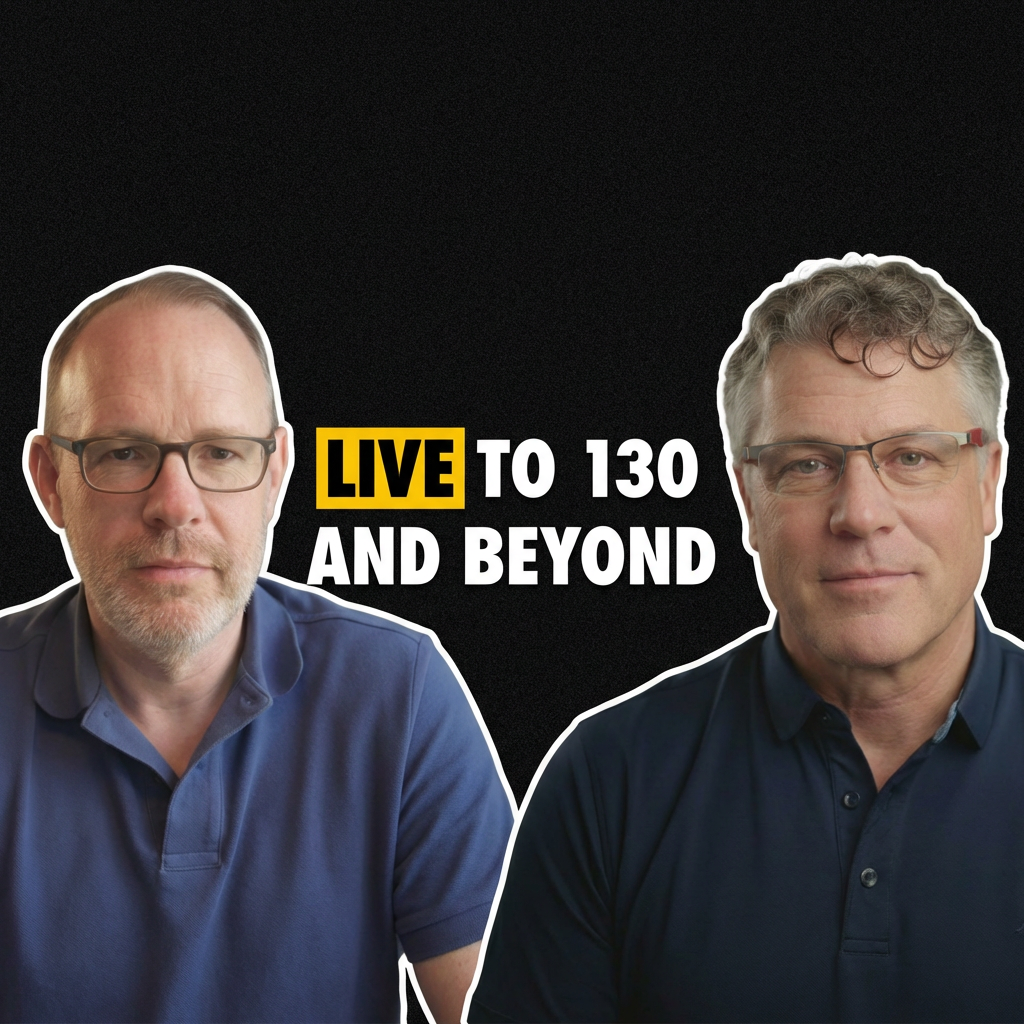
Scott Schaper and Brian McMaster sit down with longevity expert Dan Miller to explore what it truly takes to live a long, healthy, and vibrant life. The conversation dives into the role of lifestyle, community, movement, technology, and mindset in extending both lifespan and healthspan. Dan challenges modern health myths and makes a strong case for returning to ancestral habits—while strategically leveraging modern science.


Key Themes & Takeaways
Longevity Mindset
Living well past 100 is biologically possible.
120 years should be considered a baseline, not an extreme.
Genetics load the gun, but lifestyle pulls the trigger.
The #1 Longevity Factor
Community is more important than diet, exercise, or technology.
Strong social bonds are consistently linked to longer, healthier lives.
Foundations of Health (Non-Negotiables)
Sleep
Water
Movement
Whole Foods (If these aren’t dialed in, supplements and tech won’t save you)
Movement & Activity
Humans are designed to move outdoors with others.
Walking, hiking, strength, and balance prevent frailty.
Frailty, not disease, is often the real killer in old age.
Technology & the Future of Longevity
Blood tests can now detect cancer pre–stage 1.
Gene editing may soon remove inherited disease risks.
Peptides, stem cells, and diagnostics will extend healthy lifespan—but only when stacked on healthy habits.
Nutrition Philosophy
Eat real food: local, seasonal plants and animals.
Avoid ultra-processed foods and added sugars.
“Plant-based” ≠ healthy if it’s still processed.
Alcohol & Drugs
No safe level of alcohol for longevity.
Mushrooms show strong therapeutic promise with low harm potential (when used responsibly and legally).
Testing & Biomarkers
Real longevity optimization requires data. You can't optimize what you don't measure.
Blood panels
DEXA scans
Telomere length
DNA methylation
Biological aging clocks
Balance, mobility, and cognitive testing
“Wisdom Drop” Segment
Brian’s Pick
Therapeutic sunlight / mood lamp for energy and mental health
Scott’s Insight
Plateaus are normal—your body adapts.
Change variables (intensity, steps, macros) to reignite progress.
Dan’s Product Recommendation
Purest Mushrooms (purestmushrooms.com
Lion’s Mane & Cordyceps for brain, nerves, and performance
Dual-extracted, fruiting-body only, USDA organic
Scott Schaper (00:00)
Welcome listeners to the Spirit Health and Hustle podcast. Today is going to be an amazing episode. We're going to answer the question, how long can you live well? In this episode, Brian and I meet with Dan Miller, an expert in longevity who invites his global audience to join him on his road to 130 years of age. We'll have an amazing conversation, including the essential metrics to manage for lifelong wellness and what the core habits are required for vibrant health. We'll get into eating: how, when, and what to eat to properly fuel your body. Dan will share the science and some free strategies for enhancing your health, unlocking your personal longevity to achieve a long and, most importantly, healthy life. Let's get into it. We'll start with some quick introductions, starting with Brian, my co-host. Brian, where are you right now, and where do you work?
Brian McMaster / Dan Miller (00:49)
Kansas City, Missouri, Quality Solutions. We do logistics and warehousing, pick, and ship. Yeah.
Scott Schaper (00:53)
And what is him then? Nice.
Scott Schaper (00:58)
I am Scott Schaper. I'm across the border, about 45 minutes away in Lenexa, Kansas. I own RSM Marketing. We handle construction marketing across the country for contractors, construction companies, and GCs. And last but not least is Dan Miller, our esteemed guest. Dan, give us the intro.
Brian McMaster / Dan Miller (01:21)
Yeah, I'm in Kansas City, I'm at Solutions. I'm wholly unemployable and travel the country talking about how not to die early.
Scott Schaper (01:32)
Yeah, that's awesome. I'll go one step further in this intro. Why don't we go back around the room, starting with Brian? What age do you intend to live, slash live healthy?
Brian McMaster / Dan Miller (01:43)
Well, I listened to Dan do a talk at one point, and I kind of know what he's going to say. But I took my parents, who both died young, one at 69 and one at 70. And 139 is the number.
Scott Schaper (02:02)
You added them together. 139. So what about how long will that be vibrant and healthy, Brian? Have you thought about that number?
Brian McMaster / Dan Miller (02:16)
The whole way, the whole way. That's how fiery motorcycle crashes work. Well, plane crash for me. So I really want to die doing what I love to do, or I want to go in my sleep. But also, Scott and Dan, I'm pretty faith-based as well. So I look at it like this: as long as I live a wholesome, good life and I help other people, the number is not as important as it used to be, but I'm striving healthfully and vibrantly.
Scott Schaper (02:51)
Amen, brother. Yeah, how about you, Dan?
Brian McMaster / Dan Miller (02:56)
Well, I did the same thing. Dad died at 56, Mom died at 74, so 130 has been my number forever. However, it used to be 113, because it was double my dad's age plus a year. After my mom's passing, I just added those together. And now I'm thinking, because I know what's coming with peptides and stem cells and what's coming with gene editing technology, I'm gonna say 200, 250, but officially 130. I love it.
Scott Schaper (03:27)
Yeah, I don't have any plans, and I don't have a specific number. I'd be hard-pressed to come up with that number, especially one that's as relevant as you guys have. But I always thought I would live into my 90s. And so I'm kind of focused on that. And I am very focused on the fact that I watched my mom and dad decline in health. And I just thought that that was a kind of a viewfinder into my future. You know, I have part of their blueprints in me, and I just didn't want to do that. We talked about some of their health habits, and I really try to undo as much of what they did to kind of keep themselves in ill health with some autoimmune disorders and cancers and things like that. And so I'm trying my best to keep the vibrancy, keep healthy. I wanted to just kick off a couple things. I had some data I looked up regarding life expectancy, and then I have a question for you. Global life expectancy right now is 72. In the US, the average is 77. Males, 74, women, 80, which is up since 2022, but still a little bit lower than pre-pandemic levels. Here's where my stat comes in: 16% of men live to 90; 34% of women live to 90. Blue zones on average live 10 years longer, but they're three and a half times more likely to live to 100. So Dan, I know you plan to live and remain healthy well into your hundreds, living healthy to 130. How is that even possible? And do you need some technological and health advances that you know aren't here yet to get there?
Brian McMaster / Dan Miller (05:26)
I don't think so. I want to go back to what you said about Mom and Dad, and yes, you carry their DNA, but what we know about diseases that humans die of today in 2025, about 90% of them are lifestyle and environmental. 10% are genetic.
Scott Schaper (05:41)
I agree.
Brian McMaster / Dan Miller (05:42)
So what you do with your DNA is far more important than the DNA you were given at birth for most people. I can't say that's more important if you were born with MS or some of these other debilitating diseases or a heart problem. But if you were born relatively healthy, it's where you are, who you hang out with, and what you do with your meat machine that determines your longevity, far above genetics. And I'll tell you the number one factor in that and why I believe that 120 should be the bottom age that we die at, not pushing the top, because it's written about in all the religious texts. It's in there; the number 120 is in a bunch of these. So do we need technology? No.
Scott Schaper (06:28)
Yeah, I saw that, Genesis 6:3, go look it up.
Brian McMaster / Dan Miller (06:36)
Let me give you an example of that. I just put a video out today on my social feeds about this. My great-grandfather was born in 1889. He lived to 86. I want you to think about this for a second: how did a dude live to 86 and was born in the 1880s? What was his morning supplement stack like? Right, bacon and eggs. What was his cardio routine and where did he work out?
Scott Schaper (07:04)
In the field.
Brian McMaster / Dan Miller (07:04)
Yeah, move that, feed the animals, right? He was a farmer in rural North Dakota. Great-grandpa lived to 89 with zero tech. None. Nothing. Can you imagine if we took that same person's actions and put some tech on top of it? He would have lived to 110, 115, 120. There's no reason that he wouldn't have. It's just they didn't have the tech then. Plenty of people, even 100 years ago, 150 years ago, plenty of people lived into their 80s and 90s. And now we're looking at somebody in their 90s like, "Oh my God, they're old." No, they're not. We need to normalize high-functioning people in their 80s and 90s. And I'll give you an example of that. There's a gentleman named Rolf Arnim, who is a chairperson for Vistage International, Vistage Worldwide down in Tampa, Florida. Rolf is 95. And on his 95th birthday, he had a party where he parachuted into his party at 95. This is a dude who parachuted into his birthday party at 95 years old and is still running executive groups. That needs to be normal, not extraordinary. And for that, we need to adopt the number one thing our ancestors had that we just wholly ignore in our society, and that's community
. It's community over everything. Who you spend time with, who you hang out with matters more than anything I can ever talk about. It's above genetics, it's above being rich, it's above all of it. Above all of the tech is your involvement in a community?
Scott Schaper (08:41)
Really? That's why those blue zones all have a very high level of community involvement.
Brian McMaster / Dan Miller (08:47)
That's why. And when Dan Buettner wrote that book, he left out the Blue Zones that ate lots of meat because they didn't fit the narrative of the book. You can come up to the Inupiaq area in northern Alaska and hang out with my friends up there. You'll see huge, huge amounts of community. Lots of community, despite our horrible habits, lets us live longer and allows us to live happier.
Scott Schaper (09:10)
Yeah, right. Yeah, I had... Go ahead, Brian.
Brian McMaster / Dan Miller (09:15)
No, that's okay. I just wanted to say this because I was thinking about when you guys were talking about genetics and I'm sure you guys have heard this before: genetics loads the gun, but lifestyle pulls the trigger. I mean, and what you're saying and I listened to your Ted talk again, which was awesome, about the rat pack or the rat. I mean, it's like you give the ability to do things and be part of a community, and it changes everything. I mean, how they didn't go to the drug water as opposed to being contained. Yeah. Here we are contained in our little house, in our little car, and we grab a cylinder every now and then for some variety. So, yeah. You guys live in a cage that's soft and there's plenty of food.
Brian McMaster / Dan Miller (09:59)
We were explaining to some folks in Tanzania; we were looking around. Moshi, Tanzania, is a relatively urbanized area. It's a fairly modern town for being in Tanzania. It's not like a little village with huts; it's a city. There's an airport there. So we're asking some of the locals, "Do you have food delivery services? Can you just order food and have it brought to your house?" Because we're in the city, right? Uber Eats is everywhere, so is Grubhub. By the way, Grubhub in the Amazon rainforest is literally beetle that you eat from the ground. It's a different job. And I've done that, and they taste like coconut, but not a good idea to eat them raw. You're supposed to eat them cooked; I didn't know that. I just say yes to everything. So we were explaining Uber Eats to this gentleman in Tanzania. He looks square in our face without skipping a beat: "No wonder all Americans are fat." Yeah.
Scott Schaper (10:30)
I love it. This is a crunchier.
Brian McMaster / Dan Miller (10:52)
I can order food with a magic wand made of metal and glass. Some guy brings me Indian food in his Japanese car in North Dakota whenever I want it. It's insane. And I don't have to fight for food. I don't have to move for food. I don't have to worry about the temperature. It's 68 degrees and soft wherever I go. One of my favorite lines from a comedian is, "It's always 70 and snacky."
Scott Schaper (11:18)
That's great. Who said that? Let's give some credit.
Brian McMaster / Dan Miller (11:21)
Yeah, gosh, I'll think of his name.
Scott Schaper (11:24)
I'll have to look it up. Okay, so we've mentioned genetics, food, community, and health tech. We haven't really talked about activity, but can we take those five things and put them in order? Because I did not have community on here when I wrote this. Community's at the top.
Brian McMaster / Dan Miller (11:37)
Community's at the top. So Harvard's been running a study for 84 years called the Harvard Study of Adult Development. And they're showing, above anything, community first.
Scott Schaper (11:48)
Even above like high blood pressure stats? I read that same study.
Brian McMaster / Dan Miller (11:51)
If you have lower blood pressure, hang out with community. I'll ask listeners to test this. So what you need to do as a listener right now is you need to step into the laboratory. It's open all the time; you just need good gear to be out there in some weather. It's called outside. The average American goes outside 7% of their day. All right, so sit with that. We're outside animals that never go outside because it's too cold, it's too hot, it's too windy, it's too rainy. Get better gear, and then you can go outside whenever you want, right? So you simply go outside with some friends. These are people that you like, and then you move your body. Whatever that means to you. Kickboxing if you want to do that, soccer, running, biking, go for a walk, right? Grab some friends, go outside, move your body. The eight magic words to reset the human. There they are. And you tell me if your blood pressure doesn't go down. You tell me if your oxytocin doesn't go up. You tell me if you don't get dopamine. You tell me how you feel when you're outside with friends moving versus how you feel when you're sitting down eating your second or third brownie while you're watching the news. Good luck with the alcoholism if you're indoors watching the news all day. Because if we did this to beavers, they'd all be drunk and diabetic, and they'd die early. And we've done it to humans, and we think, "Well, I don't know what the problem is." I do. Go outside, or adopt the actions of our ancestors. Combine it with the modern medicine, and we should all be living—it should be a little brainer. Hey Scott, you know you and I talked about this that my happy hustle group, you remember how I raved about coming down off that mountain. We went camping, no technology. We hiked up the mountain. Yeah, we spent five days in nature, 15 entrepreneurs. It was amazing. And when we got down to the bottom of the mountain, we're having a celebratory beer, and the first thing—what's the first thing comes to your mind? And the first thing that came to my mind was, "It's loud down here". And it was. People are honking, "Get out of my way". It was just crazy. It's like, "I want to go back up in the mountain". Yeah. Yeah. One of the hardest days of my life is one of my favorite days is when we summited Kilimanjaro in Tanzania two years ago. We were tech-free for seven days going up that mountain. And I couldn't breathe. We're flat-landers. I live in North Dakota, where it's 800 feet above sea level. And we were at pushing 18,000 feet above sea level. Good luck breathing. Right? Like, it was tough. My favorite day ever is my hardest day ever because my kids were there. And some of the people that were on that trip with me will be lifelong friends because of that single adventure. So it's the community. And it's the fact that when we move together as a community to a common goal, those are going to be our favorite days ever, especially if we're outside. And that's what we're made for. We're made to move. You're not made to sit down all day. Movement triggers your body into believing that it's alive. It doesn't have to be fancy; just get up. Get up and move more; go for a walk.
Scott Schaper (14:59)
So I had this question—that's amazing—I had this question: if 130 is possible, why not higher? And you kind of already breached that ceiling and said, "Why not 200?" I read that the first human to reach 200 has already been born. So we're well on our way, which is interesting. The prediction is that they were born in the 60s, so that person is alive and well today, right now. But 130 and higher is a serious improvement over the Blue Zone phenomenon. I only keep coming back to there just because they've set a standard in aging and health for sure. How do you improve? How do you plan to improve on that phenomenon? What is the key that will unlock that?
Brian McMaster / Dan Miller (15:43)
We take all the magic from the Blue Zones and you stack on some tech. What kind of technology do they have in rural Sardinia? What kind of peptides do you think they're on? What kind of cancer screenings do they have? If we stack modern medicine and modern technology together with all of the ancient actions, 115, 120 becomes the norm.
Scott Schaper (15:52)
Great. Yeah, zero.
Brian McMaster / Dan Miller (16:11)
And that's the issue. We're not, and we're seeing aging like my mother aged out, right? So my mom died at 74, but the last nine years of her life, she had no idea what planet she was on because the Alzheimer's had taken her from us. The last five years of her life, she couldn't walk because the arthritis had crippled her ankles. Her quality of life was garbage for a decade. We're sick in this country for 20 years. And that's how our young people are picturing aging. They're not picturing aging like we should be aging. They're picturing aging like Americans are aging, which is fat, weak, slow, and sad. And that, that's—look, if you're listening, I'm not insulting you; I'd be the same damn way if I wasn't paying attention. And those are the two big magic words, right? The magic words in health and wellness in this country are just pay attention
. Pay attention to what you're eating, pay attention to who you're hanging out with, pay attention to are you drinking any water at all? Because most people aren't. How are you sleeping? All you have to do is pay attention, get something to track and measure so that you're in a good habit, pay attention to how you're moving. Fixed it. The four foundations are so stupid easy. If I throw you in a tent in my laboratory called outside, you do them. The only beverage out there is water.
Scott Schaper (17:37)
What are those four foundations?
Brian McMaster / Dan Miller (17:40)
Well, you gotta sleep, right? That's the first one. And I tell people all the time, if you're gonna go to the gym and you're sacrificing sleep to go, stop going to the gym. Like, you sleep like it's your job; it literally is. And then you gotta drink water; that's second. That's above food. You gotta drink some water, right? Two to three liters a day. Most of your beverages per day should be water. If you want some salt or something in there, go ahead, add it, no worries. If you're having some coffee, who cares? I tend to cut the caffeine off in my clients at noon so that they can get most of that pushed out of their system before it's bedtime so they don't wreck their food with it. And then you gotta move lots and eat good food. That's it, those are the foundations: sleep, water, move, eat
. Lather, rinse, repeat: sleep, water, move, eat. And then you stack the supplements in there, the peptides, the stem cells. You don't add the tech to take the place of your actions. You do the actions of the ancestors. You wrap this whole thing in community, and then you add the technology on top so that when you're in a Jiu-Jitsu class and you tear the meniscus in your knee, you can repair it without being surgically altered. Like I did. That's completely feasible with peptides and stem cells to repair some of these soft tissue injuries that traditionally we would just, "Let's cut you open and see what happens". By the way, for listeners, the number three cause of death in America is medical errors and prescription drug overdoses. Doctors aren't paying attention either. You know, it's almost like the shot now, right? The GLP-1 inhibitors.
Brian McMaster / Dan Miller (19:12)
They're not doing the work, right? "I just take the shot. I lose weight". We were just talking about somebody, "Yeah, you lost weight, and you look great, but you're not healthy". And are you trying to lose weight or are you trying to lose fat? Because trying to lose weight, I can get you to lose weight. I'm just not going to give you any water or food; you're going to lose a lot of weight. It's going to be mostly water. Cut your arm off—there's weight loss right there. But some of these prescription peptides that are—I always look at something, if it's patentable, I ask questions, right? If it's a non-patentable peptide like BPC-157 or enclomiphene, okay, I can get behind these. But when they're patented, I'm always like, "All right, what's the side effect?" Well, about 40% of the weight loss on these GLP-1 agonists is muscle and bone. And you don't get the bone back, folks. You're going to lose weight, but it's going to be bone. And that's not going to bode well. The 10-year studies on these are going to be ridiculously bad, just like they were with gastric bypass and the lap band surgery. Five-year studies said they cured diabetes; 10-year studies said, "Nope, we were wrong. Sorry". This is just as it's ever been. You're gonna see the same thing because people are bypassing nature. And I'm gonna tell you right now, you cannot biohack around nature's rules. She's been doing math for four billion years. You can't biohack around it. You have to do the work. Community, sleep, water, food, movement. Then you add the hack over the top of those healthy actions. And then we all live to 115. And it's cheaper for everybody because we're going to continue working. All the people I know that are thriving in their 80s and 90s are still going to work. They're just not working 50 hours a week in the coal mines, right? They're still mentoring, they're still part of a community, they're still assisting others. They've just shifted their role from the doer to the teacher. And I like that—that's why they're still alive. I will stand behind that forever. The only reason these guys are still alive in their 80s, 90s that I know is because they're going to work.
Scott Schaper (21:21)
Yeah, it's a social—work is very social if you do it right.
Brian McMaster / Dan Miller (21:25)
And imagine living two lifetimes. Rolf has his third career. Full-time military for 30 years, 30 years in a full-time CEO job, and now he's on his third career. That's amazing. With the wisdom that you have. Because how many times do we say, "Man, if I could just go back to when I was 18 and know what I know now?" Well, you can. And still able to skydive. Yeah, because he's maintaining his physical fitness as well. Yeah, that's amazing.
Scott Schaper (21:55)
Let's take a quick break. We'll go to our wisdom drop section, is our product, our service recommendation. Brian, whatever is on your desk in front of you.
Brian McMaster / Dan Miller (22:03)
I'm embarrassed about what I wanted to bring to light today, no pun intended.
Scott Schaper (22:11)
Dan, this is a book, resource, or a product that's been making a difference in our life over the last week, two weeks, whatever it is. So Brian, we'll team this up for you, Dan. Brian, we'll let you go first. What are you up to?
Brian McMaster / Dan Miller (22:23)
It's actually in the picture. So this simulates sunlight. So it's called a Jovial lamp. UVB too? Yes. Oh, great. And there's some gold in there. See, it's bright, it's bright, yeah. But you can actually feel the heat coming off of it as well. So I use that to increase mood and that kind of stuff. So when I'm sitting in here on a rainy day, I just pop that.
Scott Schaper (22:48)
So it's not on like your normal light source all day long?
Brian McMaster / Dan Miller (22:52)
No, no, just use it infrequently, 30 minutes at a time, something along those lines. Maybe I'm walking on my desk treadmill or something along those lines. That's super cool. I like that.
Scott Schaper (23:03)
You know, I'm gonna go with a process. I am in weight loss mode. I decided this year to get rid of my visceral fat. I dropped from 2.75 down to 0.75. I've been using a DEXA scan to figure that out. I wanted to lose the right weight. And I hit a severe plateau where I could not move the needle. I can move it up, but I couldn't move it down in the right way. And I just came to this realization that the body is such a master at adapting to everything you put at it. If you give it drugs, it'll adapt. If you take away drugs, it'll adapt. If you exercise hard, it'll adapt. If you change your diet, it'll adapt. And so I decided to make a bunch of little changes to what I was doing. I decreased intensity of some exercises, I increased the amount I run, I increased the amount of steps I took per day, changed my macro—just changed it all and made my body adapt. And so my advice this week is just let your body do what it's good at and throw something different at it. You can, I think, retrain your body to say, "Okay, this is the journey we're on right now". It's just make a change because the body is so good at adapting. So that's what I would say is if you hit a plateau in your weight loss, in your fitness goals, in your health goals, go do something different. That's mine. Dan, what's the product you would recommend to anybody right now?
Brian McMaster / Dan Miller (24:56)
Well, Purest Mushrooms because mushrooms are food, and we've been eating and using those various fungi since before written human history. So if you are not yet on the mushroom train, it's time to get on it. Lion's mane and cordyceps in the morning, they go with your coffee, for better mental clarity. Lion's mane has been shown to increase nerve growth factor. So if you're struggling with brain fog, you're struggling with neuropathy, nerve growth factor regrows neurons. The Lion's mane mushroom has been shown in clinical trials to induce nerve growth factor in humans. In humans! So get on with it.
Scott Schaper (25:34)
Eat the whole food, take a supplement, stir it into your coffee. What's the best way to ingest them?
Brian McMaster / Dan Miller (25:39)
Yeah, I like our tablets. Our tablets are no binders, no fillers, no coatings, no other ingredients, other than mushroom pressed into a little form that you can drop in your mouth hole and swallow it like all the rest of your pills. That's the easiest way to take it. You can put the powder in your coffee, but then you've got mushroom-flavored coffee. Some people don't like that, right? I tell people, "You don't need a mushroom coffee. Stop looking for the mushroom coffee. Put a tablet in your mouth and drink your favorite coffee." It's easier that way.
Scott Schaper (26:04)
Is that your Megaspoor product?
Brian McMaster / Dan Miller (26:07)
That's our Purist Mushroom product. Yeah. PuristMushrooms.com
.
Scott Schaper (26:10)
And where do they get that? Is that on DanMiller.tv? PuristMushrooms.com, thanks. I want to get that.
Brian McMaster / Dan Miller (26:16)
Yeah, we have the cleanest mushroom product in the entire world, and we have the certificates of analysis to show it. There isn't a single mushroom product in the world cleaner than ours. Grown on natural hardwoods, not in a laboratory, not on rice or grains. It's all certified USDA organic. It's grown all over the world, but we put it together in those cute little tablets right here in the United States.
Scott Schaper (26:45)
We cook a lot of mushrooms. Will you have the same effect, or is the tablet about variety?
Brian McMaster / Dan Miller (26:54)
Well, so what we did was we took the fruiting body only of the mushrooms. So we're not using any of the mycelium or the roots, if you will. And a lot of people add mycelium in because it's cheap, right? They're trying to go for what's the least expensive so we can make the most money. It's not always the best thing for the human consuming the product. So we do fruiting body only, and we do two forms of extraction. We do a hot water extraction to get everything concentrated into that nice little powder. And then we do an alcohol extraction because there are some of the active ingredients in these mushrooms that you can get even more of on a gram per gram basis if you do another alcohol extraction. So we do what we call dual extraction, and that gets us far more active ingredients so that you only need to use a gram of our product. It's just two of our little tablets, and that gets you what we would call, and this is hard because it's a food, but a clinically effective dose. Right, if this was just something you bought at the farmers market, plan on eating a half a pound of this stuff to kind of get the same effect, which people aren't going to do. That's why it's so easy to do a tablet. Just put them in your mouth or you drop them in your coffee. They dissolve in a couple of minutes. Are we at liberty to be able to talk about the funny mushrooms, the mushrooms that... We can talk about anything. We can talk about psilocybin. Look...
Scott Schaper (28:04)
Yeah, let's do it.
Brian McMaster / Dan Miller (28:09)
Professor David Nutt put together an analysis that he published some years ago of which intoxicating agents are the best. Like which ones have the least amount of addiction potential? Which ones have the least amount of potential for you to lose your job, lose your friends, economic impact? And when he did this, what he found was psilocybin sits at the place where it's the least damaging intoxicating agent you could ever use. Guess what the worst one is? Alcohol is worse than meth, cocaine, any of them. Right, yeah. So I look at this and go, if you wanna get a little funny, right, if you're trying to get intoxicated, it is better to use psilocybin mushrooms than it is to use alcohol. Right? Still don't drive. Anytime you're intoxicated, don't drive. If it's marijuana or alcohol or whatever, stop getting in your car. That's the stupidest thing ever. But mushrooms are the safest option. They're the least addictive. They have the least impact on the economy in a negative way. They have the least impact on friendships, on community, on all of it. And that's Professor David Nutt that put that together. And what I like about that is it's also medicinal. And our ancestors knew this. They've been using, I mean, go to any ancestral community and ask them about how they connected with their spiritual creator. And they will probably show you some sort of plant, whether it's Ibogaine in Africa or Ayahuasca in South America or Peyote here with the Native Americans in the southwest or maybe the San Pedro cactus. We've Amanita muscaria if you go further north into some of the tribes up above the Arctic Circle. We've always had a way to not necessarily escape, but as a religious ceremony to connect to something higher because our brain won't let us see it now. That's why I like the mushrooms. I like the psilocybin for that. Plus what they're doing right now in therapeutics for curing—curing, they're using the word cure—PTSD.
Scott Schaper (30:37)
Wow, I've seen so much research, so much more research in the last even six months to two and a half years about research into mushrooms and medicinal plants than I've seen in, I mean, do you think that, I mean, everybody's gonna go medicinal marijuana legal, and then even some states are already at recreational marijuana. Do you think mushrooms will catch up?
Brian McMaster / Dan Miller (31:04)
They did in Canada. They did in Portugal. There's a lot of places where you can just look—anytime the government is saying this plant that grows when it's rainy outside, anytime the government says those are illegal, you know there's a problem, right? Drugs that are patented are fully legal that kill people every day. Look at oxycodone, OxyContin, right? That's why prescription drug overdoses are so high because of oxycodone, OxyContin, fentanyl, all of these prescription drugs. And there's this plant that I can find in a field out here because it rained last night that is going to be growing in some cow's poop. There's a plant that I can eat that makes me meet God, and it has no long-term effects whatsoever other than positive stuff. It resets my serotonin receptors, gives me a more empathetic outlook on life. Why is that illegal? That's all we have to start asking is why is that illegal, and it's a plant, but there's patented drugs that are legal that kill people every day. They can't patent it and they can't make money off it—that's why. That's why it's hard to get marijuana or cannabis in any form. That's why even some places are so taboo about talking about CBD, which doesn't harm anyone ever. There's no LD 50 on CBD. You can't overdose on CBD. There's no lethal dose. You can overdose on water, but you can't overdose on CBD. I won't ship it. You can't—they'll take your website down if you mention it in some places. So yeah, we've got it backwards. You guys, I tell people all the time, if you're looking for the new new in health and wellness, I ask you, "Did you do the old old first?" The old stuff: movement, sleep, community, water, food, maybe some medicinal mushrooms. Then let's talk about the new stuff. You got to get that old stuff done first. And I think we lost a lot of that. We lost a lot of it because we didn't read certain parts of the religious texts from around the world. We took what we wanted to control the people and not what it took to open their minds back up to the fact that something made us. Well, and we're also hooked on convenience too. This is the Amazon effect. "I can have it today, I can have it tomorrow." Everything is soft. Yeah. "Hey, I want to lose five pounds. Here's a shot." Look, you guys, I'm going give you the secret to weight loss right now. Are you ready for it? You take your fat dog to the vet. What two things does your vet tell you to do with your dog? Feed them less. Walk them more. Okay, there it is. That's every animal on the planet. Feed it less, walk it more. I love it. Because when you go to the gym to work out, your body downregulates non-exercise activity to compensate for the exercise, but you're hungrier when you're done. And we have to understand that this thing that we're in, this temporary suit made out of meat and bones and squishy gray matter in our head telling us to say these things, this thing doesn't want us to lose weight because that means we're dying. So it's fighting you to lose fat because losing fat isn't good for the species. Fat is there to sustain you in times of less food. So we're hibernating humans, and winter never comes. That's our big problem, right? So we have to under—the more we understand that it's hard to lose weight, that our body doesn't want us to. Hey, if you just eat the right food, you don't have to count calories. If you walk more and have a good community holding you accountable, slapping that birthday cake out of your face every week when you're trying to eat birthday cake, that's called muffins, folks. That's birthday cake without frosting, and people eat it for breakfast. Like you can't have cake every day. It's okay to have it on occasion, but not every day. If you have a good community around you that takes you for walks, right? You have to walk your dog. It doesn't walk itself. So you got to have somebody around you to take you for walks. That's helping you eat better? Done. Fixed. Weight loss happens. It's automatic. And you still get to eat. You still get to eat steak and lobster. Those are health foods. You just can't have French fries every day.
Scott Schaper (35:27)
Dan, what about, I'm gonna switch topics and go a little bit more technical edginess. What about gene editing? What type of medical technology can we, like, you know, I'm thinking editing out sickle cell anemia, right? Creating like a better life for people that we can. And I'm not talking about making brown eyes blue, that sort of thing, or designer babies, yeah, which is coming.
Brian McMaster / Dan Miller (35:52)
Well, that's coming too. It's coming back.
Brian McMaster / Dan Miller (36:01)
I think being able to edit some of those gene codes out. Like if you were born with two ApoE4 genes, you've got a 79% risk of Alzheimer's. Well, what if we could just knock those out, even though you're 40, and just like now all your cells are replicating without that, and soon you're gonna have a brand new body that never knew that it had ApoE4 gene codes? Yay, right? That's coming. That stuff is so close. It's hard to talk about what's gonna come in health and wellness. It would be like—let me give you an example. 10 years ago, if I told you, "There's a blood test that's coming that can predict cancer before tumors ever show up," it's not predicting cancer, it's actually finding shed cancer DNA in your blood. They would have burned you as a witch. Like that's some ooga booga technology that you're just—there's no way. And then now Grail Laboratories out of Salt Lake City has the Galleri blood test that can find 50 types of cancer with 99% accuracy pre-stage one. I've had it done. Yeah, it's insane. That 10 years ago, we didn't even know that thing would exist. Right. And you know, just real quick, that Galleri test, we went to take it, and this was before I turned 50, Scott, and they couldn't take it. You have to be older than 50 to take it. Now, if anyone can't say Galleri because of your age, you just tell me, and I'll get it for you anytime. Yeah, we shouldn't be restricting this. Yeah, if somebody's medically curious, do the damn test. And if your doctor won't do it, fire that doctor. Yeah, because we vote with our dollars, right? It is a problem. Red dye is a problem. Quit buying stuff with red dye. And then they'll stop making it. It's no longer a problem. We can rely on the government to come in and save us, or we can save our own damn family today, right now, today. Save yourself, save your family, save your community, save the people at work. It starts with you, right now. Either you do it or you don't do it. There is no middle in health and wellness. I'm going to say this as slow as I can. Everything you do today, everything you think today, everything you drink, everything you eat, how you move, how you don't move, everything you do in modern society either helps you live longer or kills you faster. There is no neutral. None. No neutral.
Scott Schaper (38:31)
Yeah. I love the phrase, "You are what you eat". You literally are building a new person with what you stick in your mouth every day. I mean, if you want to eat tons of bread, you're going to kind of be bready and doughy. I'm sorry, that's the way it works. All right, Dan, I have a quick top 10. You ready to rate these trends? So these, I don't need to rank if they're good or bad. But how essential are they for optimizing longevity? So your lens is longevity on these. So it's rapid fire.
Brian McMaster / Dan Miller (38:59)
Yeah, I'm gonna tell you something. I haven't looked at these either. No, I'm just gonna react. So, how essential are they? Well, I need a caveat here. I need a clarifying question. Providing we're doing the basics and the foundations, then I'll wait.
Scott Schaper (39:27)
Yeah, providing we're doing the basics, 10 being essential for optimizing health, one not being useful to optimizing longevity. So sleeping seven to eight hours a day.
Brian McMaster / Dan Miller (39:39)
That's a 40.
Scott Schaper (39:41)
That's a 10. 40 out of 10. Walking 10,000 steps a day.
Brian McMaster / Dan Miller (39:46)
That is a 10 plus as well. Cold shower is free. Look, we used to have this; it was called waking up outside. So I'm going to give that about a six. But you don't need a plunge; you need a cold shower. It costs no money to turn your shower cold. One to three minutes in the morning. Get that on the back of your head so you can reduce some of that stress response later in the day.
Scott Schaper (40:08)
Great, I have a set of supplements here. Vitamin D3 and K2 daily.
Brian McMaster / Dan Miller (40:16)
Yeah, if you're testing. If your blood test says you need some, and your blood test should be right around 60 nanograms per deciliter, if it's not around 60, then yeah, that's a 10.
Scott Schaper (40:26)
Omega-3 slash fish oil supplement daily.
Brian McMaster / Dan Miller (40:28)
10, 12 for most people. Yep. Zero.
Scott Schaper (40:31)
Turmeric? A particular diet, so keto, paleo, low carb, carnivore, high protein.
Brian McMaster / Dan Miller (40:41)
Yeah, no. I'll make it easy. You can find outside in the season in the geography that you're in. So local, seasonal, organic plants and animals—plants and animals. So, and there's no—I'll tell you right now, I've been to the town of Cool Ranch, Texas. There's no wild Dorito migration there. So I tell people all the time, plants, not plant-based. Okay, stop falling for one sense. Plant-based is garbage.
Scott Schaper (41:05)
So vegan, my next one was vegan vegetarian lifestyle.
Brian McMaster / Dan Miller (41:10)
No, there isn't a single culture ever on the planet that's lived well as a full vegan vegetarian. There are pescatarian. There are, you know, but if we get 20 to 30 percent of our diet from meat, we're going to do great. Yeah, that's a hundred plus on a scale of 10. Zero. There's no such thing as healthy alcohol. So you should—I mean, I don't know how you want to phrase that—no alcohol.
Scott Schaper (41:23)
Limiting processed foods. Ten. Moderate alcohol? No safe level of alcohol.
Brian McMaster / Dan Miller (41:40)
Yeah, so mushrooms. Put the psilocybin in you guys, really. I hate to advocate for stuff that's federally illegal because it sounds like I'm some drug pusher, but guys, it's a mushroom that grows in cow crap. There's nothing that should be illegal about that.
Scott Schaper (41:56)
Yeah, I have two more here that are bonuses. Number 11 is gut health maintenance.
Brian McMaster / Dan Miller (42:03)
Yeah, big fan. The gut is the second brain. It's actually control—there's more information going up the vagus nerve from the gut to the brain than there is from the brain to the gut. So take care of the gut.
Scott Schaper (42:12)
Yeah, that's amazing. Last one, fasting, either intermittent or long-term.
Brian McMaster / Dan Miller (42:18)
Yeah, let's do what great-grandpa would have done. Let's take some wisdom from 1889, Daniel Seiglock, born in southern Russia in 1889. Do you think he did some work before he ate his first breakfast, knowing that he was a farmer?
Scott Schaper (42:36)
100%.
Brian McMaster / Dan Miller (42:37)
Yeah, it was called intermittent fasting before we had a term for it. So if you can delay some food—look, men have an easier time than women do—but if you can delay a little bit of food, as long as you're not going off the rails because you're so hungry that you're starving and hangry, delay a little bit of feeding, you're going to do okay. Scott, I want to add two in as well. I got sauna. Yeah, that's a hundred plus. That's called being outside. So infrared sauna in your house is—I'm going to tell you right now—it's a lifesaver for a lot of folks. PEMF grounding. Yeah, big fan. Huge fan. Pulse electromagnetic fields and grounding sheets under your bed. I'm a huge fan. I know some of you guys are like, "That's ooga booga nonsense". No, it's not. No. Go outside in nature. Leave your phone at home and tell me if you don't feel better after just four hours out there. Like those things make a difference. We are bio-magnetic and electrical machines. If you look at how some of those sea creatures see us, they see us as electromagnetic fields with their ampullae of Lorenzini on the front of their nose. So rays and sharks and skates all see that way. They layer that over their visual cortex, and they see us in different wavelengths of electricity. Our heart, believe it or not, has more wavelengths than our brain does as far as when those things see us. We have more electromagnetic activity in our heart than our brain. Yeah, pulsed electromagnetic fields and grounding are definitely a thing. Hydrogen. Yeah, just one more, hydrogen, and hydrogen inhalation, hydrogen water, or hydrogen. Huge amounts of antioxidants. So I have a little bot on my PubMed that can go find the real information, and it just scours all the published medical data on this. Hydrogen water is a big thing and because of its antioxidant capabilities, that's all it's doing is reducing the oxidative stress load in the human body. But I recommend the tablets, not the water bottles, because we don't know when the water bottles stop working. All of these things have a finite amount of hydrogen they can produce. I don't know when that happens, because I don't have a tester for it. So get the tablets to drop in your water. Nice. Yeah, works very, very well that way. That's good for me, Scott.
Scott Schaper (45:03)
Yeah, awesome. Well, all these things fell into a few categories: daily physical habits, supplementation, diet, and tech. What, if we had to pick a last topic, what haven't we talked enough about?
Brian McMaster / Dan Miller (45:17)
That's a good question. I would say probably how we're testing all of this stuff, because as Americans, we look in the mirror and we step on the scale. And I'm going to tell you, and if you're raising daughters, pay attention: Weight does not matter for longevity
. End of story. Weight does not matter. Fat mass does
. How much fat you carry around with you does matter only because it affects our long-term metabolic health and our endurance metrics. So what we look at, we're opening the clinic in November to our members, next January to the public at Eternum, our longevity center in Salt Lake City. We're going to measure every measurable aspect we know of in humans of longevity that we have today. So we are going to look at all of the blood work, the urinalysis, and the DNA testing. Those are vitally important if you want to see where things are headed because the blood work and the urinalysis are going to show us things that are invisible to the human eye. You can't see high blood pressure, can't see cancer, can't see cholesterol problems, you can't see vitamin D deficiencies. Now, they manifest as things we might be able to see, but you can't look in the mirror and go, "I have a vitamin D deficiency". So it manifests as, "I'm sick all the time, and I'm always sad". And what we'll be doing at the clinic is the DEXA. We're not doing a whole-body MRI because what we found is with most of the data, whole-body MRI is just a way to take money from people. There's no need to do imaging for most people unless something in the blood work says we should go see an image. And then we test balance, what we call athleticism, balance, flexibility, mobility, agility, cognitive function, memory. In addition to all of this, of course, with the DNA in the blood, we're looking at telomere length, we're looking at methylation patterns, we're looking at biological age clocks with a Horvath clock. We're looking at all of those invisible factors. You wrap that all up, you take an AI assistant that's going to wrap that all up and say, "Here's what's next for this person to live longer, to optimize what they're doing here, the actions they can take". All the information in the world means nothing without action. You can watch all the videos you want to on how to get bigger biceps, but until you go pick up heavy weights, your biceps are still going to be skinny little scrawny masses of nothing. But if you're not testing some of this along the way, how do you know if any of it's working? And that's the problem I have with modern medicine: the health care system is for sick people. So we're going to say health care, getting healthier. You don't need a doctor for this. We're medically supervised at the clinic. But you need somebody who knows health, not disease. So if one of our clients comes in and has disease, the doctor's taking care of that. But if they come in and they want to be healthier, how to optimize a human, you don't need a physician. As a matter of fact, most physicians don't know how to optimize a human. They know how to treat that strep throat. I want to optimize humans because I watch too many people around me dying early. And they're dying early because they're just not doing the things that are required. They're relying on the tech, they're relying on the supplements, they're not doing the work.
Scott Schaper (49:02)
Yeah, one of my favorite things I came across in my own health journey in the last year is that muscle is the currency of longevity
. And then most older people are dying from frailty. Yes, they have some various diseases or health conditions, but they end up sitting down for the last time because they got a knee injury, an ankle injury that they couldn't recover from. And frailty is the killer.
Brian McMaster / Dan Miller (49:25)
100%. Yeah, well, let me give you a couple of stats that will just—maybe they scare somebody into action, maybe they don't. But if you're over the age of 25, 95% of Americans never sprint another day for the rest of their life. Right, so that's tragic. And if you're over the age of 60 and you fall over, just tripping on the ground, when the carpet comes up and trips you and then goes back down and nobody sees it but you, it's as deadly as metastatic cancer. Just tripping and falling over the age of 60. So what I want to make sure people understand is it's not as hard as we make it. You don't even need a gym membership. It actually costs less than being sick. You just get a community around you that's gonna hold you accountable because there's no health pressure. Look, Scott, if we were living 5,000 years ago doing this and you didn't step up, we kicked you out. The tribe kicked you out. That's why we do whatever the tribe does. And if the tribe kicked you out 5,000 years ago, Scott, guess how you died? No, something ate you. Okay, because you are middle of the food chain, wet delicious bags of meat. That's what all of us are. We can't outrun anything outside. So without the tribe, we died, and something fuzzy ate us. That's how we died. Or we died of starvation, right? Tragic. So now in society, we still want that longing to be a tribe member. But society requires no health metrics at all. There's no pressure to be healthy in society. As a matter of fact, I've been called right wing for wanting to be healthy. We're politicizing health and wellness in some areas. It's the dumbest thing I've ever heard, right? I want you to love yourself no matter how big you are, but you gotta lose some of that weight because metabolic health is one of the main drivers of cancer, Alzheimer's, diabetes. We gotta get metabolically healthy. So stop looking at the scale and start looking at body fat. That's why I love the fact that you sent your DEXA scans to me, Scott, because you've done some hard work.
Scott Schaper (51:33)
Yeah, it's been a great journey. I feel like a million dollars these days.
Brian McMaster / Dan Miller (51:38)
So look, just pay attention. That's all people have to do. Pay attention. Here's the one lesson I want people to leave.
Scott Schaper (51:41)
Yeah. What? How long have you been at the longevity of science? How long have you been at it?
Brian McMaster / Dan Miller (51:49)
I think I've read probably about 800 books and 2,000 clinical trials on health, wellness, longevity, food, movement. I took an advanced longevity board-certified course. So board-certified longevity specialist. It's been 12 years.
Scott Schaper (52:08)
What's been the biggest discovery or aha moment in the last 12 months?
Brian McMaster / Dan Miller (52:11)
It's not going forward, going back. Looking at, how did we live into our 90s in the 1800s? That's ridiculous. How do we do that? And we're not doing that now. We think now somebody lives into the 90s, "Ooh, they're doing so well". How do we do that back then? So what are the secrets that our ancestors knew that they maybe didn't write down and teach us? And the biggest one's community. Look, I'll tell you, the thing I want people to know, especially if you're raising kids, I talk about this in my TED Talk: animals that don't have to, don't. And right now you don't have to do anything. You don't have to eat right. You don't have to walk. You can just summon food and sit in a chair all day. And you don't have to engage with other community members. A thousand years ago if you didn't, you died. Now if you don't, you're normal. And that's tragic because the number one cause of suicide is not feeling like we belong or matter. And if you're under the age of 30 as a male in America, it's in the top three causes of death. We're the only animal that kills itself. So we have all these interactions, but no connections.
Scott Schaper (53:29)
And it's no wonder that diseases are affecting younger and younger people in their 20s, 30s. It's cancer rates, all sorts of stuff.
Brian McMaster / Dan Miller (53:33)
Well, you eat French fries every day and drink soda every day and think you're not going to have a problem? That's ridiculous. Of course you're going to have a problem. It goes back to convenience. So look, this is the—like, if I had to end this with just one statement, go hug a friend today. That person you've been thinking about, go give them a physical hug and tell them you love them. That's, think...
Scott Schaper (53:59)
Yeah, if you're a male and you haven't talked to a male friend or you haven't thought about them for the last six or eight months or a year or two years, give them a text and ask how they're doing.
Brian McMaster / Dan Miller (54:08)
Tell them, "I want to get together, and I'm hugging you". Like, seriously, physical touch. Do you know back—oh God, 14, 1500s? There was a king in Germany. He pondered, "I wonder what language babies speak if no one ever talks to them or touches them? What's the natural language of humans?" So he instructed nurses in this nursery where there's babies to not touch the babies or talk anywhere near them. "Don't say anything when you're in the room. Don't touch them". All the babies died. They died from not being touched. All of them. Okay, so we need human touch, and we're not getting it from the phone. We're not getting it from the computer. We need human touch. Go hug a friend today and tell them that you love them. Tell them that they matter. You know, as a point to that, Scott, you know this. I've been measuring my sleep, and I've found that whenever Amber and I are close to each other at nighttime, just hugging and being close to each other, my sleep scores go up four points. It's nuts. It is crazy. She loves that too. I'm like, "Hey, babe, when I'm close to you, I sleep better".
Scott Schaper (55:27)
Awesome. I love that. Thank you, Brian, for wrapping that up. This is—we're running right up to an hour, which is our format. But I do want to leave it with Dan and say, Dan, how would people engage your services? How would people engage, you know, for advice, coaching, clinic work? How do they get in touch with you and use your services?
Brian McMaster / Dan Miller (55:50)
Yeah, so danmiller.tv
, just find me there. It's got all my social links on the top of the page. The clinic link is coming; we're not quite ready yet, but it's coming. puristmushrooms.com
if you want some of the best functional mushrooms on the planet. We do not sell the psilocybin mushrooms. Those are highly illegal. We have all of the rest of the mushrooms: Lion's mane, cordyceps, reishi, chaga, turkey tail, all the really cool ones. And we don't make a blend; stop with the blends. You can't get enough clinical dose for most of these blends to be effective. Just buy them individually.
Scott Schaper (56:27)
Good advice. Thank you, Dan. Stick around for a few minutes; we'll chat for a little bit. Thank you, listeners, and we'll see you next week.
Brian McMaster / Dan Miller (56:34)
Thanks, guys. Thank you.